
Low-code/No-code
Development Services
We help enterprises accelerate delivery, reduce development overhead, and respond to changing business needs through low-code and no-code platforms built for scale.





















Deploy enterprise automation
faster with low-code
-
80%
Developers free up time for higher-value work after adopting low-code.
- Forrester Research
-
90%
Reduction in development time with low-code and no-code platforms.
- McKinsey
-
50%
Organizations run more than one low-code platform at the same time.
- KPMG
Low- code and no-code comparison
| Low-code | No-code | |
|---|---|---|
| Definition | GUI-based development framework with drag-and-drop tools, pre-built components, and minimal hand-coding required | Visual programming approach where applications are built entirely without writing code |
| Coding required | Minimal - custom logic and integrations may require coding | None - fully visual, script and module-based configuration |
| Flexibility | High - supports complex logic and custom integrations | Limited - constrained to platform capabilities |
| Development speed | Significantly faster than traditional development | Fastest for simple, standard applications |
| Scalability | Enterprise-grade, complex applications | Simple workflows and basic functionality |
| Cost efficiency | Lower development cost vs traditional coding | Minimal resources: one or two experts sufficient |
| Best suited for | Enterprise apps, system integrations, scalable platforms | Internal tools, automations, and rapid process digitization |
Our low-code & no-code
development services
-

Low-code consulting and platform strategy
We assess your landscape, identify where low code creates the most value, and build a roadmap aligned with your business objectives, drawing on our expertise across Mendix, Salesforce, ServiceNow, OutSystems, Kintone, intra-mart, and SPIRAL implementation.
-

Custom low-code and no-code application development
Our cross-functional team handles mobile, web, and enterprise applications end to end, delivering production-ready software on low-code platforms in a fraction of the usual development time.
-

Rapid prototyping and deployment
The faster you reach a working product, the lower the risk of building the wrong one. With visual development tools, pre-built templates, and reusable modules, we accelerate prototyping so ideas get tested early, budgets stay protected, and only what works goes on to full build.
-

Third-party integration
We connect APIs, external services, and existing systems to keep data flowing reliably across your technology stack, without disrupting what is already running.
-

Legacy modernization
We migrate and modernize legacy systems onto modern low-code platforms, preserving core business logic while unlocking the performance and flexibility legacy environments cannot provide.
-

Data migration
No data should be lost in a transition. We move critical data from legacy environments to new platforms, maintaining integrity, continuity, and compliance at every step.
-

Maintenance and technical support
We provide ongoing monitoring, updates, and technical support that keep applications stable, current, and aligned with the business long after the initial build is complete.
-

Training
Low-code pays off most when your own teams can build, manage, and improve applications independently. We equip your people with the practical skills to do that, cutting external dependency and building capability over time.
Deep expertise across
multiple platforms and technologies
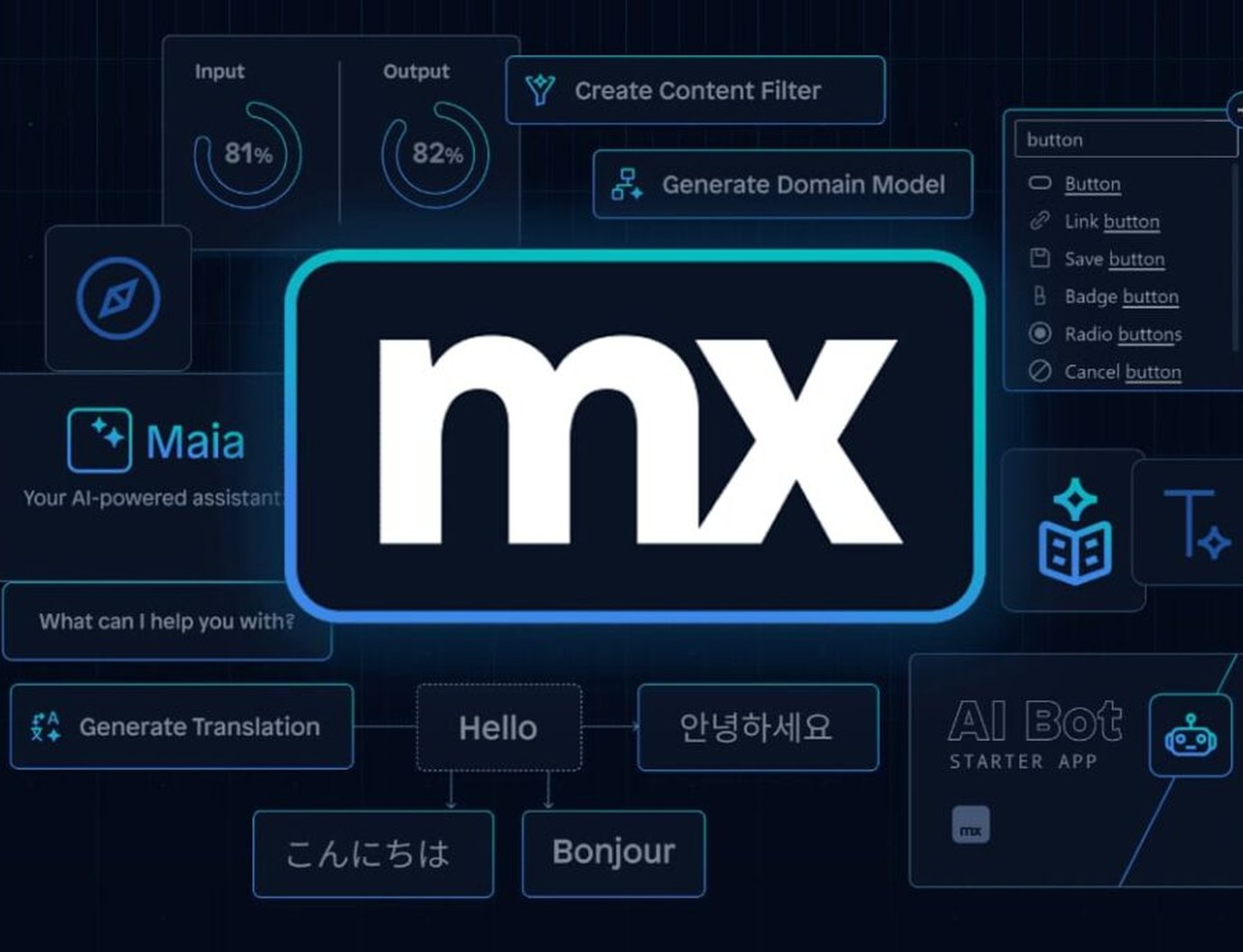
A Gartner Magic Quadrant leader that combines visual modeling, AI automation, and flexible deployment to help enterprises build and deploy applications significantly faster.
Features
- Visual modeling for intuitive application development
- AI-powered automation capabilities
- Rich library of templates and reusable components
- Mobile application development support
- Available on cloud and on-premise environments
Suitable cases
- Organizations that need to compress application development timelines
- Teams looking to embed AI-powered automation into workflows
- Companies requiring mobile app development capabilities
The world’s No. 1 CRM, Salesforce also offers a powerful low-code platform. With Lightning App Builder and Flow, teams can build custom business apps and automate processes directly on top of their customer data.
Features
- Extensive feature set with high expandability
- Deep customization and configuration flexibility
- Broad integration options through Salesforce AppExchange
- Built-in AI and IoT technology adoption
- Enterprise-grade security and platform reliability
Suitable cases
- Companies looking to strengthen and scale customer management
- Organizations with global expansion on the roadmap
- Businesses that want to stay ahead with the latest technology
Built on the Now Platform, ServiceNow App Engine lets teams create enterprise workflow apps in a low-code environment, sharing one data model with ServiceNow’s IT, HR, and customer service solutions.
Features
- Comprehensive ITIL process coverage included as standard
- Flexible customization and platform expandability
- Integrated IT asset management capabilities
- AI-driven automation for operational workflows
- High security standards and platform reliability
Suitable cases
- Companies implementing a structured ITIL-based ITSM
- Organizations consolidating IT service and asset management
- Teams driving operational efficiency through intelligent automation
A powerful low-code platform that enables both technical and non-technical teams to build and deploy web and native applications through fully visual development.
Features
- Visual development with full support for custom code
- Drag-and-drop interface for intuitive building
- Extensive templates and component library
- Full mobile application development support
- Flexible cloud and on-premise deployment
Suitable cases
- Companies that need to bring applications to market quickly
- Organizations enabling development beyond the IT department
- Teams building and scaling mobile applications
Cybozu's cloud-based platform that empowers teams to build and manage business applications through simple drag-and-drop configuration, with no coding knowledge required.
Features
- Application creation without writing a single line of code
- Intuitive drag-and-drop building interface
- Wide range of ready-to-use templates
- Strong integration capabilities across connected tools
- Purpose-built for Japanese-language business environments
Suitable cases
- Companies building internal business applications without technical resources
- Organizations already operating within the Cybozu product ecosystem
NTT Data's enterprise BPM platform, engineered for Japanese business environments that require broad functional coverage, flexible integration, and security standards that stand up to scrutiny.
Features
- Deep specialization for Japanese-language operations
- Extensive built-in features with strong expandability
- Straightforward usability backed by numerous real-world implementations
- Robust security designed for enterprise requirements
Suitable cases
- Companies building and managing business applications in Japanese
- Organizations implementing comprehensive BPM suites
- Businesses requiring tailored system integration and custom feature development
- Companies where security credibility and implementation track record matter
Trusted by financial institutions and government agencies, SPIRAL combines the speed of low-code development with high available security standards for website and business application delivery.
Features
- One-stop platform covering data collection through to utilization
- Flexible customization accessible without specialist technical knowledge
- Government-grade security for sensitive and regulated data
- Single platform addressing multiple business challenges without additional contracts
Suitable cases
- Companies building and operating business applications in Japan
- Organizations where data security and regulatory compliance are non-negotiable


The benefits your business gains from our low-code and no-code development services

Accelerated time-to-market
Low-code and no-code platforms speed up development by up to 10x, helping you stay ahead of competitors. We combine prototyping, configuration, and deployment into a single fast cycle, so you can seize new opportunities sooner.
Empowerment of non-technical teams
When business users can prototype and contribute directly alongside developers, the gap between what the business needs and what gets built narrows considerably. We set up collaborative low-code workflows that bring domain experts into the build process, improving requirement accuracy, shortening feedback loops, and producing solutions that fit your teams.
Process automation at scale
We turn manual approvals, forms, and multi-step workflows into automated processes built on low-code platforms. Routing and notifications run automatically, cutting errors and freeing your teams for higher-value work.
Stronger return on investment
Shorter delivery cycles and less manual coding reduce the cost per application, with savings compounding on every build. Because we design each solution for reuse and maintainability, your initial investment keeps generating value as your application portfolio grows.
Adaptable, low-maintenance infrastructure
Low-code applications update faster, extend more easily, and require far less maintenance than traditional builds. We design them for adaptability, letting you meet new requirements, integrate additional services, and scale up without the rework legacy systems usually involve.


Synchronized tablet imaging and AI heatmaps enhance cervical cancer screening workflows for clinicians
Extended the capture, select, and paint screens of a cervical cancer screening support tool, so clinicians can review images with a heatmap overlay, mark areas of interest, and keep every view aligned from one screen to the next.
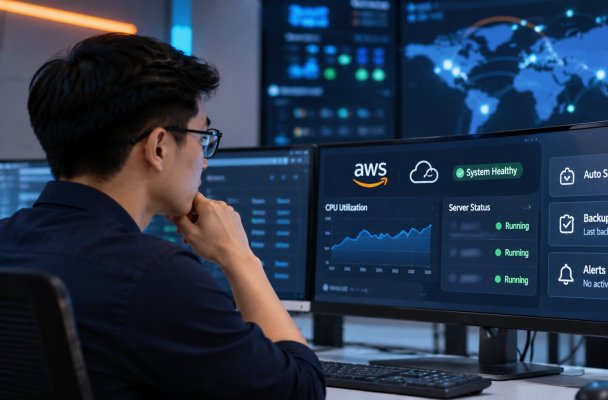
How a seamless Rails modernization enabled automated cloud scheduling and multi account AWS protection
Modernized a mission-critical Ruby on Rails management portal without operational downtime, bringing multi-account AWS oversight, automated server runtimes, AMI backups, and multi-channel incident dispatch into a single control plane.

Multi store luxury watch retailers safeguard repair agreements and customer trust through integrated LINE chat
Replaced fragmented paper slips and spreadsheets with a centralized retail platform that embeds LINE customer messaging into store repair workflows, turning chat agreements and condition photos into verifiable service records.

A multi portal recruitment platform syncs nationwide job postings across nine external boards
Engineered a unified recruitment ecosystem connecting three dedicated web portals with nine external job boards, streamlining station-based search, direct candidate chat, and automated chatbot interview scheduling
-
Synchronized tablet imaging and AI heatmaps enhance cervical cancer screening workflows for clinicians
Extended the capture, select, and paint screens of a cervical cancer screening support tool, so clinicians can review images with a heatmap overlay, mark areas of interest, and keep every view aligned from one screen to the next.
-
How a seamless Rails modernization enabled automated cloud scheduling and multi account AWS protection
Modernized a mission-critical Ruby on Rails management portal without operational downtime, bringing multi-account AWS oversight, automated server runtimes, AMI backups, and multi-channel incident dispatch into a single control plane.
-
Multi store luxury watch retailers safeguard repair agreements and customer trust through integrated LINE chat
Replaced fragmented paper slips and spreadsheets with a centralized retail platform that embeds LINE customer messaging into store repair workflows, turning chat agreements and condition photos into verifiable service records.
-
A multi portal recruitment platform syncs nationwide job postings across nine external boards
Engineered a unified recruitment ecosystem connecting three dedicated web portals with nine external job boards, streamlining station-based search, direct candidate chat, and automated chatbot interview scheduling
If these challenges sound familiar,
it's time to talk to our team
- 1
Limited expertise
Most organizations exploring low-code lack the in-house knowledge to implement it well, and projects stall before they begin.
- 2
Platform limitations
Off-the-shelf low-code tools rarely cover every requirement, making it hard to fit how your organization actually works.
- 3
Resource shortages
The right low-code engineers are hard to find at the right moment, which delays timelines and raises costs.
- 1
Proven track record across industries
VNEXT brings extensive experience delivering low-code and no-code solutions across diverse industries, drawing on deep knowledge of both international and domestic platforms to recommend the right development model for each project.
- 2
End-to-end custom development
From consulting and business analysis through development, operation, and maintenance, our team provides full-cycle support, so the delivered system matches your actual requirements, not just what the platform allows by default.
- 3
The right engineers, ready when you need them
With a skilled, multidisciplinary team in Vietnam and on-site BrSE support in Japan, VNEXT closes resource gaps quickly by matching engineers to the specific skills each project demands.
Your low-code transformation with VNEXT
-
1
Initial inquiry
Share your requirements, challenges, or questions with our team, and we take it from there.
-
2
Discovery interview
We dig into the information you provide to build a clear picture of the problems that need solving and the outcomes you are working toward.
-
3
Proposal and quotation
Based on what we learn, we put together a tailored solution, complete with a transparent quote aligned to your scope and budget.
-
4
Development team matching
We propose the right development team for your project and arrange a direct introduction, so you know exactly who you are working with.
-
5
Contract and agreement
We define and agree the delivery format, scope, and terms with you before development begins.
-
6
Requirements definition and design
We break development objectives into functional units, document requirements in detail, and confirm alignment across all stakeholders before any work starts.
-
7
Development and testing
Our Vietnam based team handles the full build, from initial development through operational testing, working in close collaboration with your team throughout.
-
8
Operation and maintenance
Our support continues long after launch, covering questions, ongoing maintenance, and version upgrades that keep the system performing as your business evolves.
Why choose VNEXT
for low-code development
-
Fast resource mobilization
We mobilize dedicated resources in as little as 2 weeks, onboarding the right specialists quickly to remove the delays that push start dates back before work begins.
-
Flexible, personalized engagement
We adapt scheduling, team structure, and approach to your requirements instead of applying a fixed model. Where new capabilities are needed, VNEXT may cover training costs to put the right skills in place from day one.
-
Full-stack technical depth
We cover design, development, and testing, because low-code work still demands real engineering. Every layer of the solution meets the same quality standard.
Low-code and no-code solutions built for every industry










Our clients say it best
-

How CAC Croit automated medical document processing with VNEXT's AI development services
VNEXT's expertise in natural language processing helped us automate the time-consuming task of sorting medical literature. Their team understood our background context so well that they consistently turned vague ideas into working tools within just a week. This reliable, Agile approach has made a real difference in our daily operations.
-

In Vietnamese offshore development, technical skill is a given - passion makes the difference
VNEXT was chosen for their team's sincere passion and proactive drive to master challenging, high-value projects. Their flexibility in providing a dedicated, secure office space enabled a remarkably rapid product release in just six months. The project's success relied on top-tier talent using international UML diagrams to ensure seamless communication and high-quality results.
-
Dedicated development team for a Japanese distribution and logistics SIer
VNEXT brought the Magento expertise our food service project needed, delivering high quality even under tight deadlines through calm, eager-to-learn engineers and proactive communication. By using workshops to bridge cultural gaps around Japanese business customs, their flexible, dedicated approach makes them feel like a true extension of our own team.
Choose your
engagement model

Staff augmentation
If your in-house team needs extra capacity or specific skills, staff augmentation adds vetted engineers who work directly under your management, so you can fill gaps quickly and scale up or down without the cost and delay of permanent hiring.
Project-based development
When your requirements are clear and stable, and you want full visibility on cost and timeline from day one, a fixed-price model is the right fit. All details are set out in a Statement of Work, changes go through a formal process, and we stay focused on delivering what we promised.
Dedicated team
Get your own offshore development center with a dedicated team. We find the right engineers with the right skills and industry knowledge, so you can start big projects quickly and save on local hiring costs.

FAQ

There is no single answer, since timelines depend on project complexity, the number of integrations required, and the platform selected. Straightforward applications can be delivered in a matter of weeks, while more complex, multi integrated solutions naturally need longer planning and build cycles. The most accurate estimate comes from a discovery session where scope and requirements are defined upfront.

Low code platforms can handle a wide spectrum of application types, from single page websites and internal tools to large scale portals with multiple external integrations. The right platform and approach determine what is achievable, which is why matching the tool to the use case matters as much as the development itself.
The core distinction is the level of coding involved. Low code development includes some hand coding, typically for the more complex or custom functionality that visual tools cannot cover alone. No code takes a fully visual, drag and drop approach that needs no programming knowledge, making it accessible to business users and non technical teams who need to build and iterate quickly.
Low code is a powerful approach but not universally the best fit. Applications that require extensive custom functionality, highly intricate user interfaces, heavy data processing for business intelligence, or complex transaction logic may benefit more from traditional development, where you have greater control over the codebase at every level.
Citizen developers are non technical users who use low code and no code platforms to build applications, automate workflows, and solve business problems without relying on the IT department. Their emergence closes the gap between business needs and technical delivery, helping organizations move faster and reduce the backlog of development requests that slow internal operations down.
Let's talk
Ready to get results?
Our team is here to help.