Future-proof Your Systems with Legacy Modernization Services
As a trusted DX partner, VNEXT HOLDINGS helps businesses replace end-of-life systems with scalable, cloud-ready platforms through a structured, low-risk process, moving from monolithic frameworks to modular, AI-ready architectures.


What legacy systems are
costing your business

Rising costs
60% of CTOs say their legacy infrastructure is too costly and can't support modern applications. Legacy-heavy organizations put 60-80% of their IT budget toward maintenance, leaving just 20-40% for innovation.
Security & compliance
Frameworks such as AngularJS, .NET Framework 4.x, Java 8, and PHP 7 have reached end of life, which means security patches have stopped. This makes systems more exposed to breaches, pushing insurance premiums up 40-60%.
Falling behind on AI
AI tools need clean APIs and real-time, event-driven systems to work well, but most legacy systems don't have this because of data silos and outdated batch processing. As a result, businesses running on legacy systems roll out new features 25-50% slower than cloud-native competitors.
Customer experience risk
72% of IT decision-makers say legacy systems make it harder to meet customer expectations and slow down product delivery. This weakens both competitiveness and customer retention.
Legacy application
modernization services we offer
Legacy assessment and modernization roadmap
We review your legacy systems, check security exposure across VPNs, APIs, and maintenance accounts, and confirm which end-of-support dates affect you. From there, we build a modernization roadmap that ranks each system by risk and business priority.
AI-assisted code analysis and documentation recovery
When no one fully understands the system anymore, we use AI tools to read legacy code in COBOL, VB6, older Java, and PL/SQL, rebuilding functional specifications and dependency maps. Critical system knowledge is captured before experienced engineers retire.
Security remediation for legacy systems
We patch and harden edge devices, remove forgotten and orphaned accounts, centralize identity and access management, and secure third-party contractor access, reducing legacy security risks while modernization is underway.
Application migration and replatforming
We migrate legacy applications from on-premises to AWS, Azure, or Google Cloud, upgrade older Java versions, and move .NET Framework applications to modern .NET, module by module, so your business keeps running throughout the transition.
SAP migration
Our experts upgrade SAP ECC 6.0 systems to SAP S/4HANA, managing every stage from system assessment and data conversion to go-live, keeping your SAP environment supported and secure.
Database modernization
We restructure legacy databases and migrate them to scalable, cloud-native architectures, improving performance and building a solid data foundation for AI, analytics, and automation.

Code refactoring and re-architecting
Our engineers reduce technical debt without changing core functionality, and break monolithic applications into modular, event-driven services where needed. Your business logic stays intact while performance, scalability, and maintainability improve.
API enablement and integration modernization
We wrap legacy systems in secure, managed APIs, replace fragile point-to-point connections, and upgrade EDI and middleware, so older systems connect safely with modern applications and business partners.
Application containerization
We package legacy applications and their dependencies into lightweight, isolated containers, making deployments simpler, more consistent, and ready for cloud environments.
Application UX/UI redesign
We modernize outdated interfaces to be more intuitive and consistent with your brand, making legacy applications easier to use across every device and touchpoint.

Our legacy modernization
methodologies
| Methodology | What it involves | Timeline | Cost | Best for |
|---|---|---|---|---|
| Rehost (Lift & Shift) |
|
A few weeks to 1-2 months | Lowest | Reducing infrastructure costs quickly without disrupting existing functionality |
| Replatform |
|
1-3 months | Low to moderate | Improving performance without a full rebuild |
| Refactor |
|
2-4 months | Moderate | Addressing technical debt when keeping the underlying logic |
| Re-architect |
|
4-9 months | Moderate to high | Businesses needing long-term scalability and flexibility |
| Rebuild |
|
6-12+ months | High | Systems that can no longer support the business, technically or functionally |
| Replace |
|
3-9 months, depending on solution complexity | Varies | When modernizing the existing application isn't cost-effective or practical |
The key values of system modernization
Saving IT budget
Modernized companies redirect 40-60% of maintenance spend into feature development and initiatives, turning technical debt into budget for faster innovation and product growth.
Competitive edge
Businesses that build innovation into daily operations meet current and future demands more easily, staying ahead of competitors still running on outdated systems.
Stronger security and compliance
Patched frameworks keep audits clean and exposure low. Decoupled architectures isolate incidents fast, reducing the risk of unapproved access and costly data breaches.
Less maintenance overhead
Modern tools integrate more easily with current infrastructure, cutting the ongoing maintenance and updates legacy systems typically demand from IT teams.
AI-ready architecture
Structured, API-first data layers replace undocumented legacy logic, giving AI agents a reliable foundation to operate on and actually deliver value.
Easier system integration
Connecting systems into one source improves communication across departments, replacing scattered data with a clearer, more reliable operational view.

















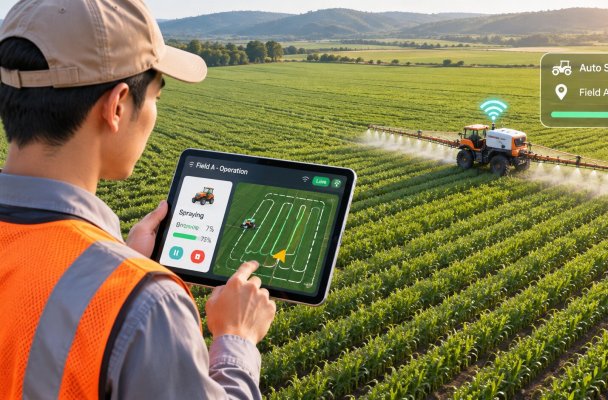

How a multi platform IoT architecture delivered real time supervision and ISO task tracking for field robots
Delivered a multi-platform precision agriculture ecosystem bridging Windows, mobile, and web applications, enabling remote telemetry tracking, ISOBUS machine terminal displays, and 2D/3D field task execution for autonomous agricultural robots.

A field camera app and verification album automate tamper proof photo documentation for site inspections
Engineered an end-to-end field evidence platform linking a mobile tag camera with a cloud-managed album, embedding digital blackboards, validating image authenticity in real time, and automating bulk audit report exports.

Synchronized tablet imaging and AI heatmaps enhance cervical cancer screening workflows for clinicians
Extended the capture, select, and paint screens of a cervical cancer screening support tool, so clinicians can review images with a heatmap overlay, mark areas of interest, and keep every view aligned from one screen to the next.
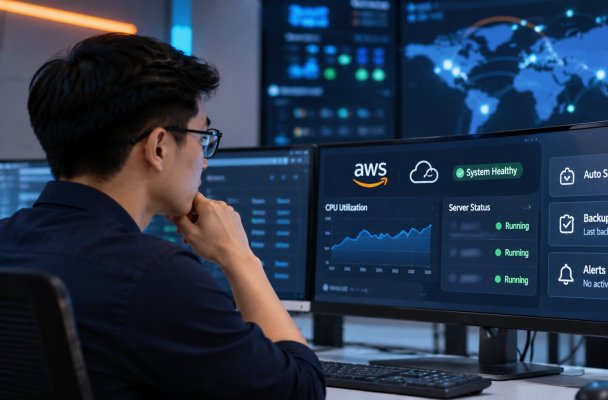
How a seamless Rails modernization enabled automated cloud scheduling and multi account AWS protection
Modernized a mission-critical Ruby on Rails management portal without operational downtime, bringing multi-account AWS oversight, automated server runtimes, AMI backups, and multi-channel incident dispatch into a single control plane.
-
How a multi platform IoT architecture delivered real time supervision and ISO task tracking for field robots
Delivered a multi-platform precision agriculture ecosystem bridging Windows, mobile, and web applications, enabling remote telemetry tracking, ISOBUS machine terminal displays, and 2D/3D field task execution for autonomous agricultural robots.
-
A field camera app and verification album automate tamper proof photo documentation for site inspections
Engineered an end-to-end field evidence platform linking a mobile tag camera with a cloud-managed album, embedding digital blackboards, validating image authenticity in real time, and automating bulk audit report exports.
-
Synchronized tablet imaging and AI heatmaps enhance cervical cancer screening workflows for clinicians
Extended the capture, select, and paint screens of a cervical cancer screening support tool, so clinicians can review images with a heatmap overlay, mark areas of interest, and keep every view aligned from one screen to the next.
-
How a seamless Rails modernization enabled automated cloud scheduling and multi account AWS protection
Modernized a mission-critical Ruby on Rails management portal without operational downtime, bringing multi-account AWS oversight, automated server runtimes, AMI backups, and multi-channel incident dispatch into a single control plane.
Our clients say it best
-

How CAC Croit automated medical document processing with VNEXT's AI development services
VNEXT's expertise in natural language processing helped us automate the time-consuming task of sorting medical literature. Their team understood our background context so well that they consistently turned vague ideas into working tools within just a week. This reliable, Agile approach has made a real difference in our daily operations.
-

In Vietnamese offshore development, technical skill is a given - passion makes the difference
VNEXT was chosen for their team's sincere passion and proactive drive to master challenging, high-value projects. Their flexibility in providing a dedicated, secure office space enabled a remarkably rapid product release in just six months. The project's success relied on top-tier talent using international UML diagrams to ensure seamless communication and high-quality results.
-
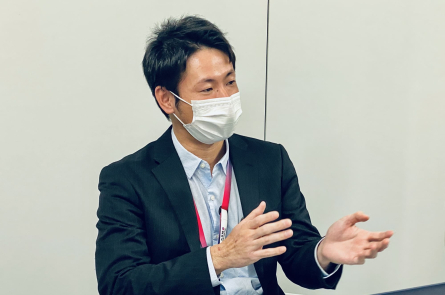
Dedicated development team for a Japanese distribution and logistics SIer
VNEXT brought the Magento expertise our food service project needed, delivering high quality even under tight deadlines through calm, eager-to-learn engineers and proactive communication. By using workshops to bridge cultural gaps around Japanese business customs, their flexible, dedicated approach makes them feel like a true extension of our own team.
Advanced technologies we
use
to modernize legacy
systems

Artificial Intelligence
We embed AI capabilities into modernized legacy systems, replacing manual processes with self-learning models that support real-time analytics, accurate predictions, and automated decision-making across core business functions.


Computer vision
We equip businesses with computer vision algorithms that support tasks like image analysis, quality management, and inventory tracking, extracting insights from visual data to inform business decisions.

IoT
Our team develops networks of connected devices that exchange data with other systems over the internet. We integrate software with industrial or consumer IoT networks, enabling real-time data collection and processing to support daily operations.

Blockchain
We modernize your solution with blockchain-based functionality, adding transaction transparency and stronger security through self-executing smart contracts.
What makes our legacy
modernization services different

Cloud-first execution
VNEXT brings extensive experience transitioning complex legacy environments to modern cloud ecosystems. Our architects tailor each migration to meet business-critical goals, balancing performance, compliance, and cost efficiency across AWS, Azure, and GCP.

Scalable enablement
Every modernization strategy we deliver builds on modern DevOps practices, serverless architecture, and infrastructure-as-code. Using Terraform, Pulumi, and GitOps workflows, we help your systems gain agility and traceability from day one, supported by CI/CD pipelines and automated QA.

Enterprise-grade engineering
Our engineers bring deep expertise in legacy modernization, platform re-architecture, data restructuring, and security hardening at scale. We deliver change across highly regulated industries and enterprise-critical systems, tying every decision to a measurable business outcome.

Deep domain expertise
Our team combines technical depth with industry-specific knowledge and real-world experience across industries and product types, helping us modernize legacy systems for each specific sector.





Choose your
engagement model

Staff augmentation
If your in-house team needs extra capacity or specific skills, staff augmentation adds vetted engineers who work directly under your management, so you can fill gaps quickly and scale up or down without the cost and delay of permanent hiring.
Project-based development
When your requirements are clear and stable, and you want full visibility on cost and timeline from day one, a fixed-price model is the right fit. All details are set out in a Statement of Work, changes go through a formal process, and we stay focused on delivering what we promised.
Dedicated team
Get your own offshore development center with a dedicated team. We find the right engineers with the right skills and industry knowledge, so you can start big projects quickly and save on local hiring costs.
Cost factors of modernization services

Project timeline

Scope and complexity

Engagement model

Team hourly rates

Tech stack selection

Level of customization
Technologies we work with
-
 React
-
 Angular
-
 Vue
-
 Node
-
 React Native
-
 Next
-
 Ember
-
 HTML
-
 CSS
-
 JavaScript
-
 .NET
-
 Golang
-
 PHP
-
Node.js
-
 Java
-
 Python
-
 Rust
-
 C/C++
-
 Ruby
-
 Unity
-
 AWS
-
 Google Cloud
-
 Azure
-
 Docker
-
 Kubernetes
-
 Terraform
-
 Ansible
-
 Prometheus
-
 Puppet
-
 Jenkins
-
 Elasticsearch
-
 GitLab CI/CD
-
 iOS
-
 Android
-
React Native
-
 PWA
-
 Flutter
-
 Swift
-
 Kotlin
-
 Open NLP
-
 TensorFlow
-
 LangChain
-
 LlamaIndex
-
 Hugging Face
-
 MySQL
-
 Microsoft SQL Server
-
 Azure SQL
-
 PostgreSQL
-
 Oracle
-
 MongoDB
-
 DynamoDB
-
 Apache Hive
Legacy modernization process
we follow
Legacy system assessment
Our team reviews your legacy architecture and system dependencies, alongside your business needs and available documentation. This includes a cybersecurity assessment, usage analysis, and total cost of ownership calculation, helping us identify key issues and risks before any modernization work begins.
Modernization model selection
Based on the assessment, we determine the right modernization approach and technology stack, define project scope, and build out a detailed plan, including budgeting, risk management, and a proof of concept to validate the chosen direction before full implementation.
Software modernization
Our team executes the modernization plan from start to finish, delivering comprehensive documentation throughout and testing the solution thoroughly, including user acceptance testing to confirm it meets real-world needs.
Post-modernization support
Once the solution is live, we support user and administrator training, monitor system performance, and troubleshoot issues as they arise.
More services we cover


FAQ

Legacy modernization reduces technical debt, strengthens security, and improves system performance, while giving the business faster time to market, lower long-term costs, and greater ability to scale. It also makes the software easier to maintain and better positioned to support future growth.

Costs depend on the chosen methodology, the scope and complexity of your systems, the engagement model, and the level of customization required. A lift-and-shift rehost is the most affordable path, while a full rebuild or re-architecture requires a larger investment. After an initial assessment, VNEXT provides a detailed estimate covering timeline, budget, and expected total cost of ownership savings.
Timelines range from a few weeks for a simple rehost to 12+ months for a complete rebuild. Most replatforming and refactoring projects fall within 1-4 months, while re-architecting a monolith into modular services typically takes 4-9 months. The exact duration depends on system complexity, data volume, and integration requirements.
Look for a partner with a proven track record across modernization methodologies, certified cloud expertise on AWS, Azure, and GCP, and experience in your industry. It's also worth evaluating their assessment process, how they manage migration risk and downtime, and the post-modernization support they provide, including training, monitoring, and ongoing optimization.
Let's talk
Ready to get results?
Our team is here to help.