
Building a connected AI-powered learning platform for business English training
Grew a single support engagement into three connected systems, capped by a leading AI powered learning app, without ever missing a delivery deadline across a long running partnership.
PROJECT OVERVIEW
Field | Content |
Client | Tier 1 Japanese EdTech company specializing in online business English and Japanese conversation training for working professionals |
Market | Japan |
Industry | Education / EdTech |
Engagement Model | Three Dedicated Labo Teams, running in parallel and in sequence over time |
Scale and Duration | A long running, multi team engagement delivered across three coordinated development teams |
Core Technology Stack | Laravel, GraphQL, Flutter, Node.js, OpenAI API, and AWS ECS Fargate |
ABOUT THE CLIENT
This case study is based on a real VNEXT project. The client's identity and certain project details have been anonymized or generalized for confidentiality purposes.
Our client is a Japanese EdTech company that provides online business English and Japanese conversation training for working professionals, alongside talent solutions that connect global IT professionals with employers in Japan. Their platform supports thousands of corporate learners who rely on consistent, high quality coaching and a smooth digital experience across web and mobile.
THE CHALLENGE
The relationship began small. VNEXT started as a single Labo team responsible for an internal coaching management system used by the client's own consultants and administrators, a system with genuinely complicated business logic that still needed to respond quickly even as its data grew.
At that stage, the team mostly worked from specification documents the client had already written, without much direct visibility into the business reasoning behind them. That gap showed up early: the defect rate came in well above the internal quality benchmark, a clear signal that understanding the reasoning behind each requirement mattered just as much as building it correctly.
As trust grew, so did the scope. The client asked VNEXT to take on two more pieces of the puzzle. One was a customer facing platform that let students book lessons, purchase courses, and track their progress, originally built on a separate codebase that needed to connect smoothly with the coaching system above it. Midway through that work, the client shifted its target audience from business clients to individual consumers, which meant reworking business logic, user experience, and security standards without pausing delivery.
The other new piece was a mobile learning app the client had acquired from a third party. Because VNEXT had not built the original app, the team first needed to fully understand legacy logic it had never written, then integrate it with the client's existing learner data without disrupting the experience for current users.
With three related but distinct systems now in play, and a client that needed all of them to keep growing together, VNEXT took on the challenge of running three coordinated teams instead of one, while keeping every workstream reliable enough to build on.
PROJECT OBJECTIVE
The client wanted a single software partner who could keep three connected parts of its learning platform growing together instead of drifting apart: the internal system its own coaching staff use every day, the customer facing platform where learners book and manage their lessons, and a mobile app built on a foundation the client had not originally written.
The goal went beyond simply keeping each system running. It was to let all three evolve together as the client's own business kept changing, including a shift in target audience from business clients to individual consumers, without ever slowing down delivery or letting one system fall behind the others.
APPROACH AND METHODOLOGY
Because this engagement grew and changed shape over an extended period, VNEXT's approach evolved alongside it. Four moments best show how the team worked.
Growing from spec driven delivery to shared ownership
In the earliest stretch of the engagement, the team largely translated the client's own requirement documents into code. Over time, that shifted. The team began joining the client's own business discussions directly, so that requirement changes could be met with an informed recommendation instead of a literal implementation. That shift showed up clearly in the numbers: the defect rate on the coaching system fell by roughly two thirds since the engagement began, even as the scope kept growing.
Handling a business model change without pausing delivery
When the client shifted the booking platform's target audience from business clients to individual consumers midway through development, the team ran a rapid impact analysis to separate what could be reused from what needed a rebuild, then held focused requirement sessions to make sure the new consumer facing logic reflected how individual learners actually behave, not just how business accounts had.
Releasing safely under a changing scope
As requirements kept shifting, VNEXT restructured its release process to protect stability. Iterations shipped one at a time instead of in large batches, a simplified branching strategy removed unnecessary intermediate steps, and every sprint kept a buffer of extra hours reserved for urgent requests, so unplanned work no longer forced later releases to slip.
Setting clear rules for AI assisted development
As the team began using AI tools in daily development, it also set clear boundaries for how that assistance could be used. The team defined a specific set of tasks AI was allowed to help with, and every AI generated result went through a human review before it was applied, keeping the benefits of AI assisted development without giving up quality control.
TEAM SCALE
Across this extended engagement, VNEXT mobilized more than fifteen engineers across three dedicated Labo teams, several of whom stayed on the account since its earliest stretch and grew into new responsibilities along the way.
- Backend developers: PHP and Laravel specialists, several with more than ten years of experience, responsible for the coaching system and its ongoing modernization
- Frontend and full stack developers: VueJS and Nuxt.js developers who build and maintain the customer facing booking experience
- Mobile and AI developers: Flutter, Node.js, and Python engineers who built and maintain the mobile learning app and its AI features
- QA engineers and Bridge Software Engineers: several team members combine testing with direct client communication in Japanese, with one tester on the account growing into a bilingual Bridge Software Engineer role over multiple engagements
THE SOLUTION AND TECHNOLOGY STACK
VNEXT expanded its footprint gradually and deliberately, building each new system to work in step with what already existed rather than treating every engagement as a fresh start. Today, three coordinated teams keep the client's entire learning ecosystem running and growing together.
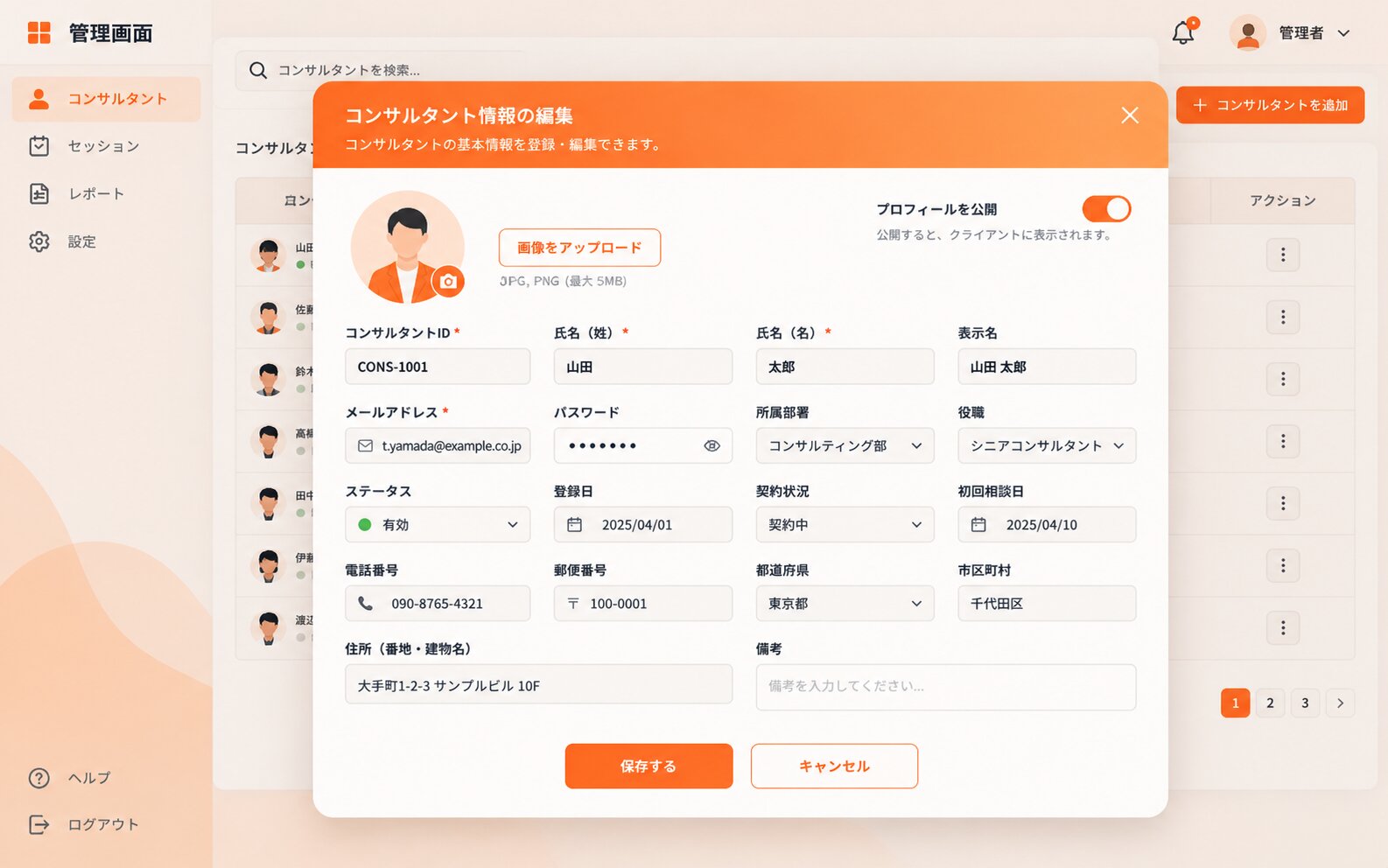
A three system learning ecosystem
- Internal coaching operations: the original engagement, now matured into a stable system that manages student contracts, consultant schedules, session recordings, and automated invoicing for thousands of active learners.
- Customer facing bookings: a system that lets students book lessons, purchase courses, and check their learning history, now extended with a reskilling program that lets individual learners buy a course package and unlock a set number of lesson credits.
- A leading AI powered mobile app: a business English learning app rebuilt from an acquired codebase, now offering AI generated role play conversations, a shadowing tool for pronunciation practice, and full synchronization with the client's web based learning content.
Continuous modernization
Rather than leaving any one system to age, VNEXT has kept upgrading the technical foundation underneath all three. The team migrated the coaching system to newer PHP and Node.js runtimes, moved toward a cleaner separation between business logic and data through event driven design patterns, and standardized the booking platform on a GraphQL API layer that reduces unnecessary data transfer between frontend and backend.
AI powered learning features
On the mobile side, the team built AI generated dialogues that adapt to a learner's chosen character, accent, and context, paired with a shadowing feature that lets users record and replay themselves for self assessment. A smart flashcard review mode randomly selects vocabulary for quick practice, and learning results can be exported to PDF and shared instantly through automated cloud storage.
Technology Stack
Layer | Technology / Platform Used |
Backend | Laravel, Node.js (Express style API), GraphQL (Lighthouse), FuelPHP |
Frontend | VueJS, Nuxt.js, Apollo Client, Flutter/Dart |
AI and Data | OpenAI API, Python for natural language processing, Redis Cache |
Database | Amazon RDS (MySQL), Firebase (Firestore and Realtime Database) |
Infrastructure and Deployment | AWS ECS Fargate, Application Load Balancer, Amazon S3, Amazon CloudFront, Amazon Cognito, Docker |
THE RESULTS
What began as a single support contract has grown into a long running, three team partnership that keeps expanding because the client keeps trusting VNEXT with more of its platform.
- Strong customer satisfaction: a documented customer satisfaction score of 98.4 out of 100, well above the internal benchmark
- Major quality improvement: defect rate on the coaching system fell by roughly two thirds since the engagement began, while the booking platform team has sustained effort efficiency above 129 percent against target
- Consistent on time delivery: on time delivery held at 100 percent across nearly every reported engagement, regardless of how much the scope grew
- Meaningful scale: more than fifteen engineers across three coordinated teams supporting thousands of active learners
The client's platform today runs across three connected systems, each maintained by a dedicated VNEXT team that keeps building toward the next stage of growth.
Có thể bạn quan tâm
-
Building a multi-device AI biometric screening platform for healthcare
-

Modernizing a legacy enterprise messaging app for secure corporate communication
-
Building a digital repair order app for automotive dealers
-
Sustaining reliable SAP ERP delivery for a Japanese manufacturing partner
-

Automating urban safety with IoT road heating systems

Năng lực liên quan
Kết nối với chúng tôi
Biến mục tiêu thành kết quả?
Chúng tôi sẵn sàng đồng hành cùng doanh nghiệp.
 3 ĐÁNH GIÁ