
Augmented and Virtual Reality Development

AR vs VR
| Augmented reality | Virtual reality | |
|---|---|---|
| Environment | Enhances the real world with digital overlays | Replaces the real world with a fully digital environment |
| User presence | User remains aware of and connected to physical surroundings | User is fully immersed and isolated from the physical world |
| Hardware | Smartphones, tablets, AR glasses (e.g. HoloLens, Apple Vision Pro) | VR headsets (e.g. Meta Quest, PlayStation VR, HTC Vive) |
| Interaction | Real-world and digital elements interact simultaneously | Interaction is entirely within the constructed digital space |
| Primary use cases | Field guidance, retail try-on, surgical overlays, navigation, training aids | Immersive training, architectural walkthroughs, gaming, therapy, product demos |
| Best suited for | Workflows where context from the physical world matters | Experiences that require complete focus and presence |
Our AR/VR development services
-

AR development
We build custom augmented reality applications that extend what users see and interact with in their physical environment, layering intelligent 2D and 3D elements that respond meaningfully to the world around them.
-

VR development
Step your users inside richly rendered 3D worlds. Every interaction feels convincing, and every detail earns its place in the experience.
-

Custom AR/VR app development
Nothing here comes off a shelf. Our team builds every application as a fully custom solution, shaping it with care through concept, design, and launch.
-

Immersive UI/UX design
Designing spatial interfaces that feel instinctive across headsets, tablets, and phones, we let people move and interact naturally in spaces that flat screens were never made for.
-

AR/VR for connected devices
By linking AR/VR apps to sensors, wearables, and IoT infrastructure, we create experiences that read the real world as it happens and respond with context-aware feedback that standalone software cannot match.
-

AR/VR strategy and consulting
Not sure where AR or VR fits your business? We help you find where it creates real value, choose the right technology
stack, and map a roadmap with a clear, defensible path to return.
Give users an experience they won't
want to miss through all kinds of solutions
-
AR/VR training and simulation

-
Remote assistance and live AR guidance

-
Virtual product configurators and try-on

-
Interactive showrooms and product demonstrations

-
3D modeling and data visualization

-
Visual recognition and object detection

-
Sensor-integrated AR/VR applications

-
AR-guided workflows and task assistance

-
AR/VR game development

-
Immersive onboarding and workforce enablement

-
Virtual prototyping and design validation



Key values that AR & VR introduce

Workforce productivity
Keep distributed teams aligned and working through AR guided workflows and remote assistance tools, with no need to be on site.
Revenue and cost performance
Buyers decide faster when virtual product experiences guide them, and simulation and prototyping cut the costs that build up before a product ships.
Operational excellence
Real time AR overlays, sensor data, and automation work together to lower error rates, reduce downtime, and lift performance across key business functions.
Content and communication
What flat media cannot show, interactive 3D content can, making complex products, spaces, and ideas easy to grasp for any audience.
New service and product lines
By opening opportunities that did not exist before, AR and VR give you a clear way to stand out in markets where competitors have yet to adopt it.
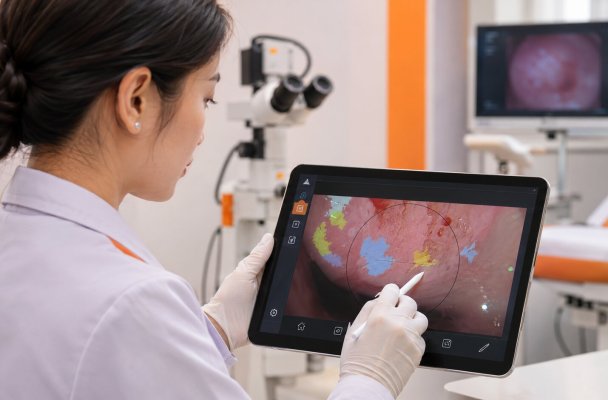

Synchronized tablet imaging and AI heatmaps enhance cervical cancer screening workflows for clinicians
Extended the capture, select, and paint screens of a cervical cancer screening support tool, so clinicians can review images with a heatmap overlay, mark areas of interest, and keep every view aligned from one screen to the next.
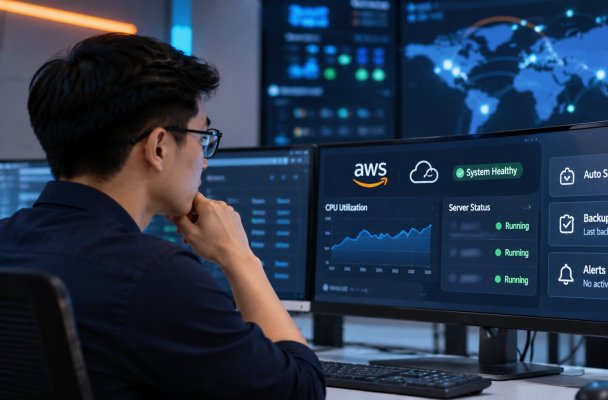
How a seamless Rails modernization enabled automated cloud scheduling and multi account AWS protection
Modernized a mission-critical Ruby on Rails management portal without operational downtime, bringing multi-account AWS oversight, automated server runtimes, AMI backups, and multi-channel incident dispatch into a single control plane.

Multi store luxury watch retailers safeguard repair agreements and customer trust through integrated LINE chat
Replaced fragmented paper slips and spreadsheets with a centralized retail platform that embeds LINE customer messaging into store repair workflows, turning chat agreements and condition photos into verifiable service records.

A multi portal recruitment platform syncs nationwide job postings across nine external boards
Engineered a unified recruitment ecosystem connecting three dedicated web portals with nine external job boards, streamlining station-based search, direct candidate chat, and automated chatbot interview scheduling
-
Synchronized tablet imaging and AI heatmaps enhance cervical cancer screening workflows for clinicians
Extended the capture, select, and paint screens of a cervical cancer screening support tool, so clinicians can review images with a heatmap overlay, mark areas of interest, and keep every view aligned from one screen to the next.
-
How a seamless Rails modernization enabled automated cloud scheduling and multi account AWS protection
Modernized a mission-critical Ruby on Rails management portal without operational downtime, bringing multi-account AWS oversight, automated server runtimes, AMI backups, and multi-channel incident dispatch into a single control plane.
-
Multi store luxury watch retailers safeguard repair agreements and customer trust through integrated LINE chat
Replaced fragmented paper slips and spreadsheets with a centralized retail platform that embeds LINE customer messaging into store repair workflows, turning chat agreements and condition photos into verifiable service records.
-
A multi portal recruitment platform syncs nationwide job postings across nine external boards
Engineered a unified recruitment ecosystem connecting three dedicated web portals with nine external job boards, streamlining station-based search, direct candidate chat, and automated chatbot interview scheduling






















The world your users see is
about to get a lot more interesting

Cross-platform development
Whether your users reach for a phone, tablet, headset, or wearable, our AR and VR experiences are adapted to each device without compromising quality. The quality holds up no matter how people access them.

Location-based AR
GPS, accelerometer, and compass data let our apps know where a user is. From there, they respond with overlays and information tied to that specific place and moment.

Recognition-based AR
Objects, gestures, facial expressions, visual markers, and surroundings can all act as triggers. Our team builds the logic that decides what to show, when to show it, and how to make it feel like a natural part of the scene.

Projection-based AR
Our software casts interactive 3D projections onto physical objects, so users can examine and learn from them in ways flat media cannot match. That makes it especially valuable in manufacturing, logistics, and technical training.
Our industry-specific AR & VR solutions
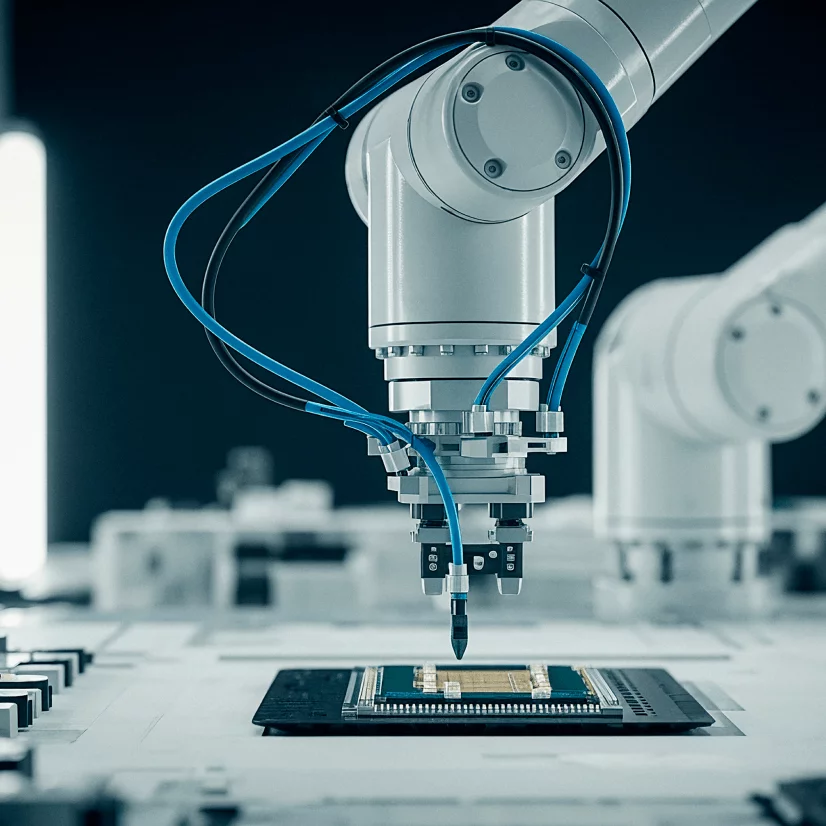
Every hour of downtime and every production error carries a cost. AR and VR are built to significantly reduce both.
- Virtual prototyping and pre-build simulation
- AR-guided assembly and quality control
- Immersive technician training

In finance, the signals that matter often stay buried in flat dashboards. AR and VR surface them, turning complex data into something clients can see, explore, and act on with confidence.
- Trading data visualization
- Virtual client onboarding
- VR branch and ATM training

With AR and VR, medical teams train and rehearse at full precision, in a setting where mistakes carry no real cost.
- AR-assisted surgery and procedural guidance
- VR rehabilitation and therapy
- Virtual medical training and simulation
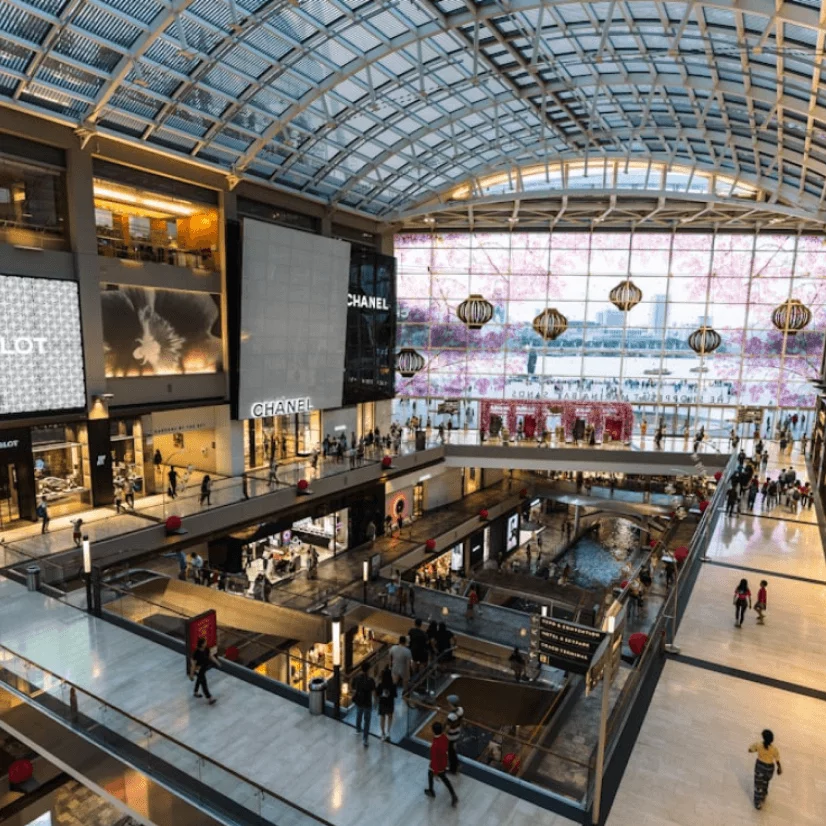
Once a customer can see a product in their own space or on their body, the decision to buy becomes far easier.
- Virtual try-on and product visualization
- AR in-store navigation and product information
- Immersive virtual showrooms

Students learn in different ways. Our team uses AR and VR to turn lessons into immersive experiences that make even the hardest concepts clear.
- Virtual field trips and historical recreations
- Augmented science and anatomy labs
- Immersive skills and vocational training

Audiences no longer want to watch an experience. They want to step inside it.
- AR/VR game development
- Virtual exhibitions and live events
- Interactive AR brand experiences

The journey starts long before the first flight, and AR and VR bring destinations to life at the moment travelers decide.
- Virtual destination previews and property tours
- AR-guided location tours and wayfinding
- Immersive in-flight and in-room entertainment

At scale, small things add up fast. One misplaced item, one missed scan, or one short delay can ripple across your entire operation.
- Pick-by-vision warehouse solutions
- Smart glasses scanning and inventory management
- Remote inspection and quality assurance

Field operations in remote or hazardous environments call for tools that work as hard as the people using them.
- AR-guided field maintenance and repair
- Remote site inspection and monitoring
- VR safety and hazard training

The firms that win are the ones whose ideas stand out, not just the ones that get the job done.
- Immersive client presentations and proposals
- Virtual collaboration and remote assistance
- VR compliance and professional training
AR/VR project flow
-
1
Nghiên cứu
We audit your business objectives, technical environment, and target users to define the scope, identify the right AR/VR approach, and establish clear success criteria before a single line of code is written.
-
2
Solution architecture
We design the technical foundation, selecting the appropriate platform, hardware targets, and integration points to ensure the architecture can support the experience at the scale and performance it demands.
-
3
Design and 3D modeling
Spatial interfaces, 3D assets, animations, and environment layouts are crafted with precision, balancing visual fidelity with the performance constraints of the target device so immersion is never compromised by technical limitations.
-
4
AR/VR development
Core application development runs in parallel with third-party software integrations and continuous testing, ensuring that functionality, stability, and compatibility are validated throughout the build rather than addressed at the end.
-
5
Refinement
We stress-test the experience across devices and real-world conditions, resolve performance issues, and fine-tune every interaction until the product meets the standard set at the outset.
Our tech stack
Câu hỏi thường gặp

Investment varies considerably depending on scope, platform targets, and technical complexity. Focused single-platform applications can come in well below six figures, while enterprise-grade experiences with custom 3D environments and hardware integrations can exceed $100K. The most reliable path to an accurate number is a structured discovery phase, where requirements are mapped against budget, trade-offs are made visible, and the most cost-effective route becomes clear.

Spatial computing introduces constraints that standard development does not. High-quality 3D content is resource-intensive to produce, hardware fragmentation demands consistent performance across very different devices, and the bar for user experience is considerably higher in three dimensions. Performance optimization is non-negotiable, and visual realism requires meticulous attention to lighting, physics, and scale. None of these are insurmountable with the right team and process in place from the outset.
The strongest applications start with a clear use case and a well-defined understanding of the target audience. Hardware selection, performance targets, and content quality need to be established early, as architecture decisions made upfront directly shape what is achievable within budget. Scalability is worth building in from day one rather than retrofitting later.
Augmented reality layers digital content onto the physical world, keeping users present in their real environment while adding information and interactions on top of it. Virtual reality replaces the physical world entirely with a constructed digital environment. AR enhances an existing context; VR creates a new one.
Kết nối với chúng tôi
Biến mục tiêu thành kết quả?
Chúng tôi sẵn sàng đồng hành cùng doanh nghiệp.