
Replacing paper-heavy training records with a unified cloud platform for driving schools
Delivered a cloud platform for driving schools that carries students from enrollment to graduation, gives instructors a tablet built for the practice track, and exports ledgers in the exact format each license type requires.
PROJECT OVERVIEW
Field | Content |
Client | A company that provides cloud software to driving schools |
Market | Japan |
Industry | Professional Services |
Engagement Model | Dedicated development team |
Scale and Duration | A focused engagement covering coding and integration testing of a multi center SaaS platform |
Core Technology Stack | PHP, Laravel, jQuery |
ABOUT THE CLIENT
This case study is based on a real VNEXT project. The client's identity and certain project details have been anonymized or generalized for confidentiality purposes.
Our customer provides cloud software to driving schools, the training centers where people learn to drive and work their way toward a license. Running one of those schools means looking after a long, regulated journey for every student, from enrollment through lessons and exams to graduation, across more than thirty license categories that each follow their own rules. The customer's platform brings that whole journey into one place, so school staff no longer have to hold it together with paper files and memory. Exact financials are withheld for confidentiality.
THE CHALLENGE
Software for driving schools is shaped by regulation more than by taste. Every license category has its own lesson structure, its own examination path, and its own legally required record, and a school cannot hand an authority a page that is almost right. That meant the platform had to be exact in places where most business software is allowed to be flexible.
The product was also still taking shape while it was being built. Our customer was working out details of the final product as the project moved forward, and the specifications lived in the customer's own repository, which is a perfectly natural way to work. It did mean, though, that an update could be made on one side without reaching the other at that very moment, and with so many interlocking rules, keeping everyone looking at the same version of the truth became the real challenge.
Then there were the people who would use it. Office staff work at a desk on a PC, while instructors and examiners stand on a practice track and need to record results, comments, and skill ratings on a tablet in the middle of a lesson. Behind both sat many separate driving schools sharing one platform, each of which expected its own data to stay private.
PROJECT OBJECTIVE
The customer wanted a single platform that digitizes the whole training lifecycle for many driving schools at once: students and their records, practical and theory lessons, a three stage examination process, approvals, and the official documents that come out the other end. It needed one interface for office staff and another designed for the practice track, and it needed to produce paperwork that satisfies the rules for every license category it supports.
APPROACH AND METHODOLOGY
Agreeing on what the specification means before each task
Because the specifications were still evolving, our team began each task by confirming with the customer which version we were working from, and we attached that version to the ticket so everyone could see it. When the work was released, it was accepted against that agreed version. Anything that changed afterward, whether a detail that had not been designed yet or a specification that turned out to need correcting, was recorded as a documentation issue in git, so nothing was lost and no one was surprised at the end.
A daily habit that keeps everyone on the latest page
We also asked the customer to attach the specification file to each task as well as pushing it to the repository, which gave us a second place to look. On top of that, our team lead reviewed the specification for a task one day before work began and checked in with the customer once more, so that the developer picking it up started from what was true that morning rather than from what had been true the week before.
Designing to the real paper, not to the data
The ledger export was where precision mattered most. Instead of building it purely from the data a user could enter on screen, our team asked the customer for a scanned copy of the ledger that a real driving school uses, and studied it closely. From there we fixed the layout and set limits on how many characters each field could hold, so exported pages keep their shape however the information on them varies. A legal document does not stretch to fit its content, so the system was designed to respect the page rather than let the page bend.
Offering improvements along the way
Throughout the project, our team prepared plans that followed the customer's own operating policies, and where we saw a way to improve an important function, we suggested it. That kept the conversation about what to build collaborative, and it is a large part of why the platform fits how driving schools actually work.
TEAM SCALE
Our team for this engagement numbered eight, working as a dedicated team with five developers at its core and clear ownership of planning, requirements, and quality around them.
- Project manager: handled planning, scheduling, and task tracking across the whole delivery
- Bridge systems engineer: led requirement analysis and kept day to day understanding aligned with the customer
- Developers: wrote the code, reviewed one another's work, ran unit tests, and fixed defects
- Quality assurance reviewer: reviewed the plan and estimates, checked that tasks followed the agreed process, and judged quality and schedule from an independent point of view
THE SOLUTION AND TECHNOLOGY STACK
The result is a platform that follows a student from the day of enrollment to the day of graduation, and gives each person involved, from the front desk to the practice track, the screen that suits their work.
What was built
- Student and record management: keeps each student's profile, learning progress, and the full history of changes to their data in one place
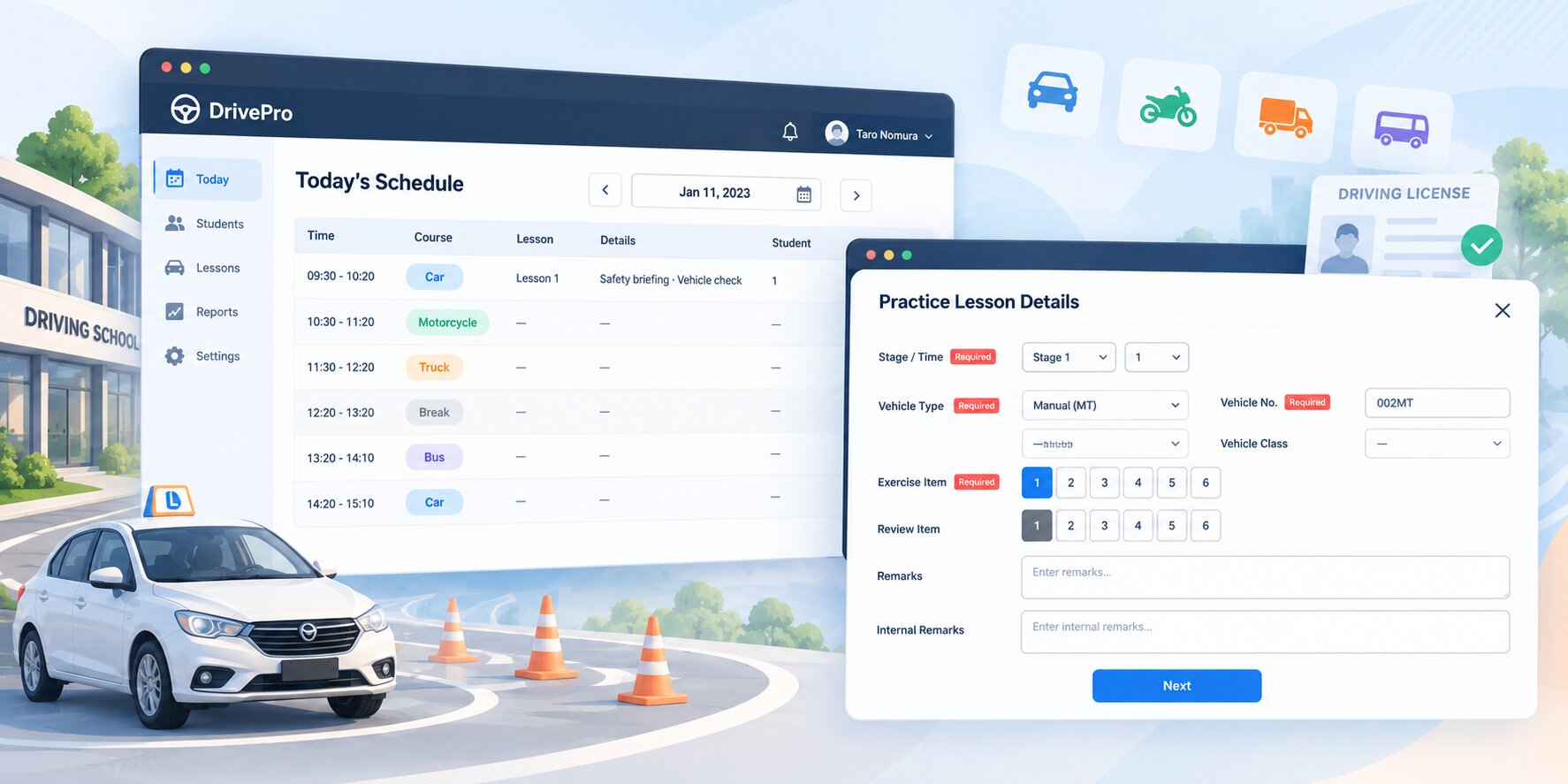
- Practical and theory lessons: lets instructors record results, comments, and skill ratings directly on a tablet while a lesson is happening
- Three stage examinations: guides students through the completion test, the provisional license test, and the graduation test, checking automatically that the prerequisites for each stage are met
- Aptitude checks: records driving practice, physical ability, color recognition, and hearing assessments
- Multi step approvals: routes activities through approval steps that follow each role
- On demand lesson queue: manages requested lessons and supports bulk import from CSV files
- Legal ledger export: produces the official learning ledger as a PDF, with a separate template for each license type because each is required to look different
- Roles and data separation: supports six roles, from system administrators to instructors and examiners, and keeps each driving school's data isolated from the others
- Many schools, one platform: lets several driving schools operate side by side on shared infrastructure
Technology Stack
Layer | Technology / Platform Used |
Backend | PHP 8, Laravel 9 |
Frontend | jQuery, with a PC interface for office staff and a tablet interface for instructors and examiners |
Documents | PDF export with a dedicated template for each license type |
Collaboration | Redmine for ticket tracking, git for specifications and issues |
This platform sits within VNEXT's broader web application development practice, which covers multi user business systems built to carry regulated, record heavy workflows.
THE RESULTS
Driving schools that once relied on paper and manual cross checking now work from a single record of each student that their staff, instructors, and examiners all use.
- Paperwork that matches the rules for each license: the ledger export follows a dedicated format for every license type, so a school can produce the official page directly from the system
- Records captured where the lesson happens: instructors enter results and ratings on a tablet at the practice track instead of writing them down and copying them later
- Exams that cannot be skipped ahead: prerequisites are checked automatically between the three examination stages, so a student only reaches a test once they are eligible for it
- Room for the customer's own growth: because many schools share one platform with their data kept separate, the customer can bring on a new driving school without building anything new for it
- A specification trail the customer can trust: every release is tied to an agreed version and every later change is recorded, which makes the next round of changes much simpler to plan
For a customer whose product has to stand up to licensing rules every day, a platform that is exact where the law requires it, and easy where the people using it need speed, is what lets its driving schools spend their time teaching people to drive.
Có thể bạn quan tâm
-
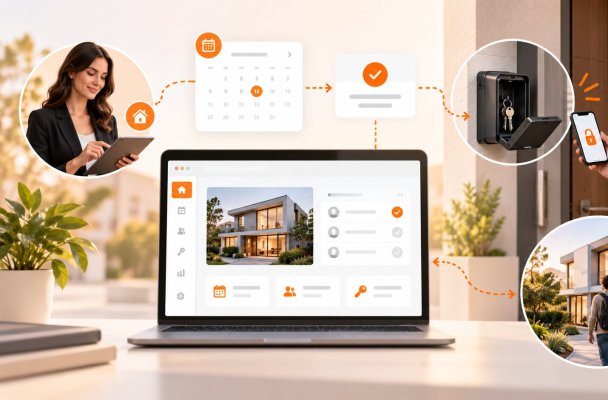
Security hardware company eliminates manual key handoffs with smart property access
-

Measuring project carbon emissions across materials transport and on-site machinery on a unified web platform
-

Turning a Legacy Showroom into a 24/7 Global Car Marketplace & Auction Engine
-
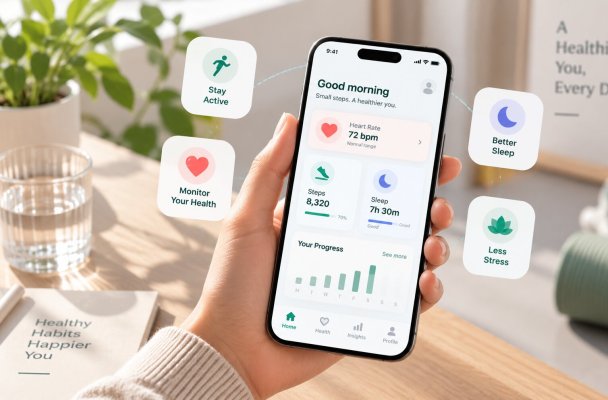
Japanese healthtech leader enables 100% offline-ready biometric screening on cross-platform medical terminals
-

Modernizing a legacy enterprise messaging app for secure corporate communication
-
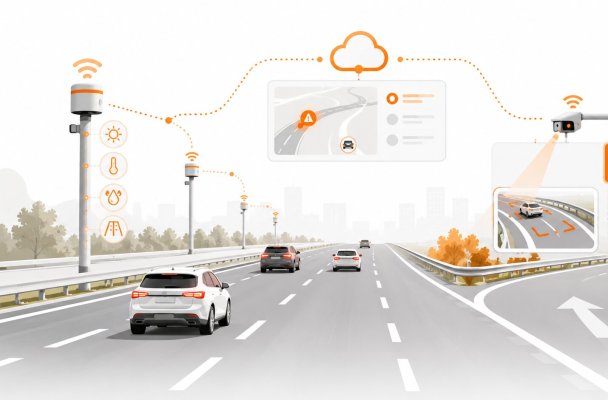
Connected IoT sensor network prevents road hazards on Japanese highways in real time
-

Bakery distributor eliminates manual stockouts and surplus with data-driven demand forecasting
-

Digital card catalog empowers collectors with frictionless online deck building
-

Synchronized DeFi product rollout delivers full asset management and staking across three blockchain networks

Năng lực liên quan
Kết nối với chúng tôi
Biến mục tiêu thành kết quả?
Chúng tôi sẵn sàng đồng hành cùng doanh nghiệp.