
A field camera app and verification album automate tamper proof photo documentation for site inspections
Engineered an end-to-end field evidence platform linking a mobile tag camera with a cloud-managed album, embedding digital blackboards, validating image authenticity in real time, and automating bulk audit report exports.
PROJECT OVERVIEW
Field | Content |
Client | A company providing software for managing and verifying photographs taken in the field |
Industry | Enterprise Software & DX |
Engagement Model | Development engagement followed by ongoing maintenance |
Scale and Duration | A multi component build covering a camera app, an album, and the services behind them |
Core Technology Stack | Node.js, React, Vue, AWS Lambda, DynamoDB, Redis |
ABOUT THE CLIENT
This case study is based on a real VNEXT project. The client's identity and certain project details have been anonymized or generalized for confidentiality purposes.
A photograph taken on a job is more than a memory. It is a record that someone may later have to rely on, to show what was done, where, and in what condition. The customer builds software for exactly that kind of photograph: a camera app that labels pictures as they are taken, and an album where they are organized, searched, and put to use. In this kind of work, a photo is only valuable if people can trust it, and finding the right one among thousands has to be easy.
THE CHALLENGE
The product was really several products that had to agree with each other. There was a camera app that applies tags, blackboard details, and location at the moment of capture, an album for organizing and filtering photos, tools for importing and exporting very large files, a way of producing PDFs, and a link to the customer's own API.
Two demands stood out. Photographs and video are heavy, so moving and storing them in bulk had to work for files such as archives, vector graphics, and video without slowing everything else down. And the platform had to give an answer to a question that matters a great deal in record keeping: is this photograph genuine, or has it been altered or faked?
Requirements also came in pieces. The customer's thinking about details such as PDF output developed as the work went on, so the team needed a way to keep estimates and decisions steady while the specification filled in.
PROJECT OBJECTIVE
The customer wanted a tagged photo album and tag camera that make field photographs easy to label, find, and verify, with the ability to handle large files in bulk and to connect with the customer's own systems.
APPROACH AND METHODOLOGY
Estimating from a prioritized list
Our team asked the customer to list its priority tickets and send them to us for estimates before work started. Having the customer's own ranking meant that effort went to what mattered most, and it gave both sides a shared view of what could be delivered when.
Clarifying before building
We asked the customer to make the specification for a task clear before we began it, so that no one had to stop halfway and wait for a confirmation. It protected the overall schedule from the kind of small delays that add up.
Estimating the reach of every task
For each task, our team assessed how far the change would reach before estimating it, and built extra time into the estimate where a task touched other parts of the platform. A photo platform has many linked features, and the estimate should reflect that.
Collecting questions into one list
Rather than sending questions one by one, our team gathered them into a single, complete list for the customer to answer together. It cut down on scattered confirmations and made each round of answers go further.
TEAM SCALE
Eight people worked on the project, covering mobile app development, the backend, the web frontend, and testing.
- Project manager: ran the delivery and the customer's priority list
- Communicators: translated documents and carried project information between the customer and the team
- Mobile developer: built the tag camera app
- Backend lead: designed and built the API and services
- Frontend developer: built the album and management screens
- Tester: verified the flows from capture to album to export
THE SOLUTION AND TECHNOLOGY STACK
The platform is built on AWS, in line with our wider cloud application development work, and it follows a photograph from the moment it is taken to the moment it is delivered.
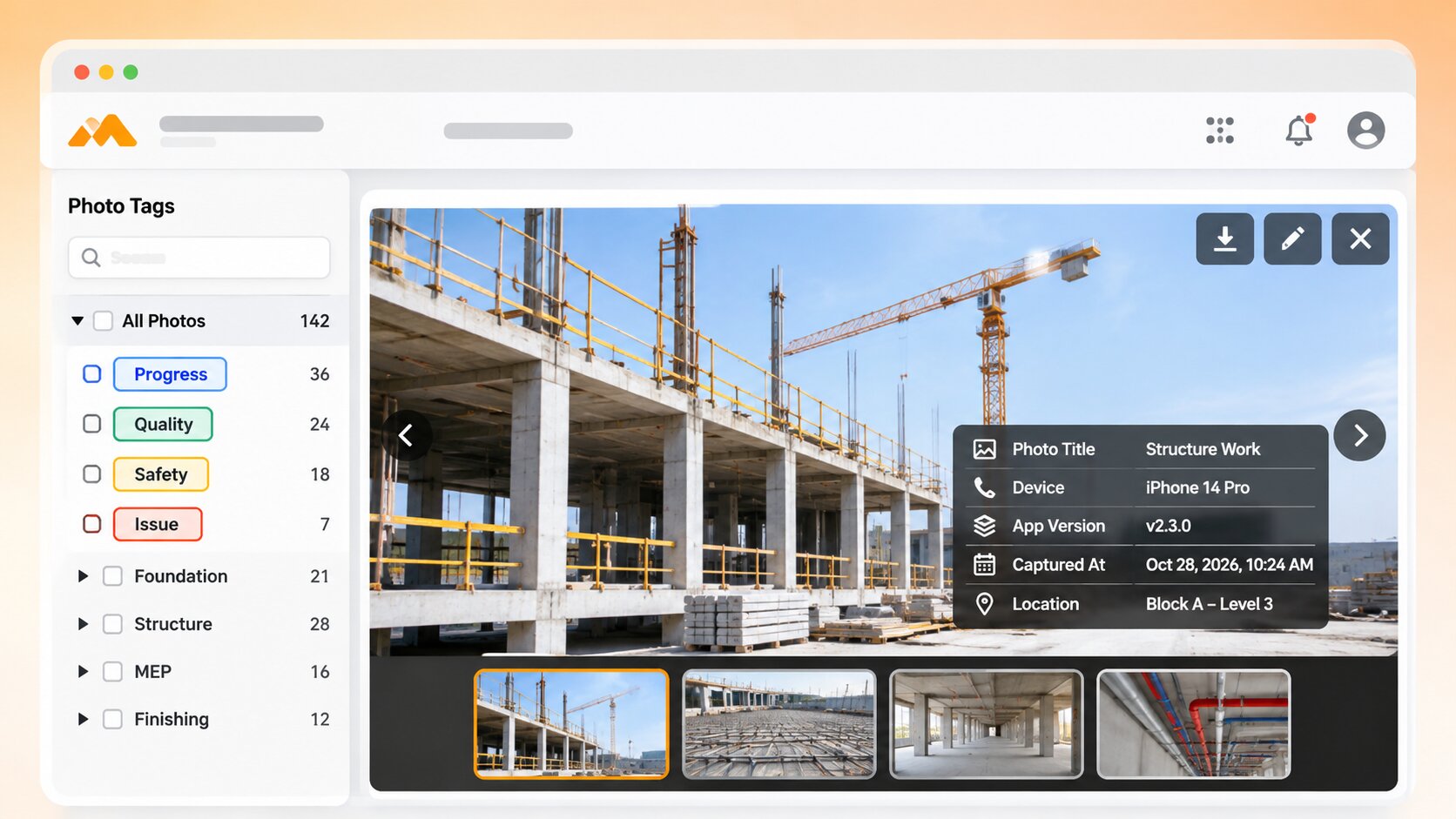
What was built
- Tag camera: takes photographs and attaches tags, blackboard information, and location to each one at the moment of capture
- Tag album: organizes photographs by tag, with filters, so the right picture can be found quickly
- Hashtags and location tags: gives teams their own ways of labeling and grouping photos
- Blackboard information: stores and manages the board details that accompany a photograph
- Authenticity checking: checks each image and shows whether it passed, so genuine photos can be told from false ones
- Large file import and export: moves archives, vector images, and video in and out in bulk
- PDF output: produces PDF documents from photographs and their information
- Connection to the customer's API: links the platform to the customer's own systems
Technology Stack
Layer | Technology / Platform Used |
Backend | Node.js on AWS Lambda |
Frontend | React and Vue |
Data and caching | Amazon DynamoDB, Redis |
Real time | WebSocket |
Operating system | Amazon Linux |
Tools | Visual Studio Code |
THE RESULTS
- Large photo libraries that stay manageable: the platform deals with the problem of managing heavy photo and video files.
- Information that is quick to find and reliable: tags, filters, and blackboard details let the customer control information conveniently, quickly, and accurately.
- Photographs that can be trusted: an authenticity check separates genuine images from false ones.
- A platform that runs well on AWS: the product works well in the cloud environment it was built for.
- Estimates the customer can plan around: prioritized tickets, impact assessments, and consolidated questions gave both sides a steady rhythm.
The customer ends up with a place where field photographs are labeled when they are taken, checked when they arrive, and ready when they are needed.
You may also like
-

How a seamless Rails modernization enabled automated cloud scheduling and multi account AWS protection
-

Keeping one enterprise messenger seamless across four native platforms
-

Modernizing a legacy enterprise messaging app for secure corporate communication
-
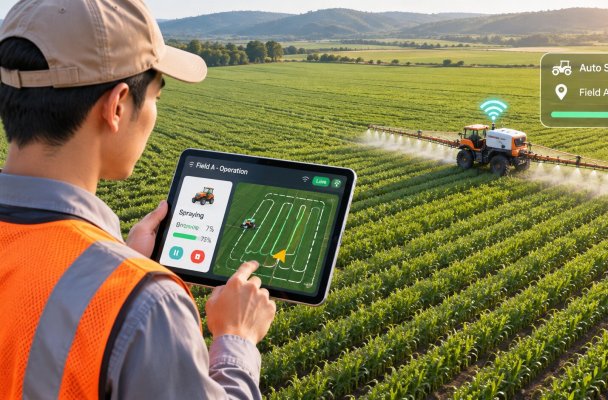
How a multi platform IoT architecture delivered real time supervision and ISO task tracking for field robots
-
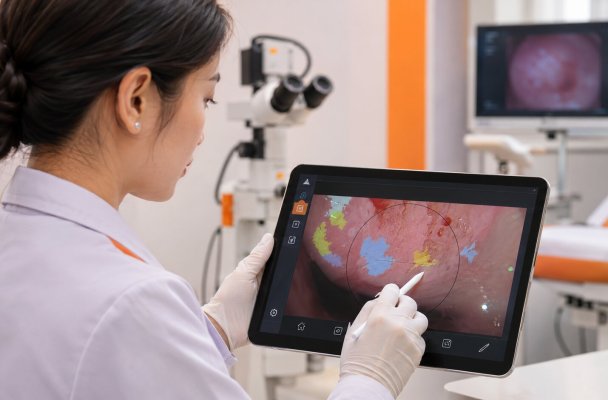
Synchronized tablet imaging and AI heatmaps enhance cervical cancer screening workflows for clinicians
-

Multi store luxury watch retailers safeguard repair agreements and customer trust through integrated LINE chat
-

A multi portal recruitment platform syncs nationwide job postings across nine external boards
-

Interactive polygon maps and connected IoT sensors modernize daily operations across regional farms
-

A specialized healthcare recruitment portal puts clinics and candidates in direct conversation

Let's talk
Ready to get results?
Our team is here to help.