
Healthcare CRM Solutions

A healthcare CRM is an industry-specific CRM solution that helps medical service providers securely store and manage patient information in one centralized place. It automates sales and marketing processes such as patient acquisition, outreach, appointment reminders, and follow-ups, and it strengthens collaboration between clinical and administrative teams.
Challenges we help to solve
in implementing healthcare CRM solutions
Types of healthcare CRM software

Patient-focused CRM
This CRM keeps patient communication consistent from the first inquiry through ongoing care. It handles inquiries, follow-ups, and appointment reminders, with support from AI chatbots and ticket management. Patients can gain more personalized care, shorter wait times, and direct support.

Marketing CRM
Marketing CRMs group patients by condition, demographics, or visit history and deliver campaigns to each segment. Engagement metrics indicate how outreach performs across channels over time.

Operational CRM
Operational CRMs cover the daily workflows behind patient care, including scheduling, referral processing, and resource management. Automating these routines lowers coordinator workload and improves data accuracy across clinical and administrative teams.

Analytical CRM
An analytical CRM consolidates patient and operational data into reports and dashboards. These insights are used to identify behavioral patterns, track clinical outcomes, and assess performance trends before making decisions about care delivery and growth.


Healthcare CRM software development services we offer


Healthcare CRM software customization
We tailor healthcare CRM software to fit an organization's specific workflows and use cases. Our team helps you set up features for specific patient care processes, connect the CRM to existing systems, and adapt the user interface to each role.

Healthcare CRM software migration
Our team manages the entire migration to a new healthcare CRM, covering data extraction, transfer, and the redesign of workflows and integrations. We also support organizations moving their CRM from on-premises infrastructure to the cloud.

Healthcare CRM integration
Our engineers integrate the CRM with EHR platforms, billing systems, scheduling tools, and third-party applications using HL7 and FHIR standards. Patient and operational data then flows accurately between systems across the organization.

Healthcare mobile CRM development
We build mobile CRM applications with essential features. Staff can manage patient information, arrange appointments, and communicate with patients from any location with ease.

Healthcare CRM software development
Our engineers design and build fully custom healthcare CRM software, covering architecture, feature design, and usability.

Healthcare CRM software consulting
Our healthcare IT team evaluates your business requirements and strategic goals, then recommends the right CRM platform and feature scope. We also draw up the plan for customization and integration before development starts.

Healthcare CRM software support and maintenance
We maintain the healthcare CRM after launch, managing upgrades and resolving issues. Our team also keeps the system aligned with regulatory compliance and security requirements.
Core features of a healthcare CRM
360-degree patient data management
- Consolidate records from EHR systems, mHealth apps, and patient portals
- Give clinicians one view of medical history, test results, and appointments
- Retain full communication history across every channel
Multichannel communication
- Reach patients via email, SMS, or mobile app
- Send previsit questionnaires and post-treatment surveys automatically
- Provide message templates for routine correspondence such as visit confirmations
Smart scheduling and reminders
- Book in-person and telehealth appointments
- Flag no-shows and trigger surveys through the patient's preferred channel
- Reschedule missed appointments automatically and notify the patient
Patient engagement and behavior analytics
- Apply sentiment analysis to feedback to measure satisfaction
- Present satisfaction and no-show survey results in dashboards
Marketing automation
- Automate email campaigns for patient acquisition and retention
- Segment audiences and send targeted messaging from the CRM
- Personalize app, portal, and website content when integrated with the EHR
Báo cáo và phân tích
- Deliver real-time visibility into patient data and operational performance
- Turn demographic, treatment, and practice metrics into actionable information
- Support role-specific dashboards for clinical, administrative, and executive users
Patient self-service portal
- Let patients view health information and book appointments themselves
- Handle prescription refill requests and direct messaging with providers
EHR and clinical system integration
- Establish bidirectional data flow with EHR, EMR, billing, and lab systems
- Keep clinical and administrative records aligned throughout
Platform-based vs custom
healthcare CRM software
| Criteria | Platform-based CRM | Custom CRM |
|---|---|---|
| Workflow fit | Suits organizations with standard patient care and administrative processes. Workflows outside the standard setup need extra configuration, and each layer becomes harder to maintain. | Tailored to match your existing processes, such as referral routing, care coordination, and patient outreach. |
| Implementation time | Typically weeks to a few months. Core functionality is available at deployment and the timeline covers configuration, data migration, and user training. | Typically several months, scope-dependent. Covers requirements definition, architecture, development, and testing, with delivery in phases. |
| Cost structure | Lower initial investment, followed by recurring per-user licensing. Costs scale with headcount and additional modules. | Higher initial investment, no licensing fees. Ongoing costs are limited to maintenance and hosting. |
| Tích hợp | Prebuilt connectors cover common EHR, billing, and scheduling systems. Other integrations require custom development and remain constrained by the platform's API. | Every integration is built to specification, including legacy and in-house systems. Data mapping, sync frequency, and error handling follow your requirements. |
| Long-term control | The vendor determines roadmap, pricing, and upgrade cycles. Customizations may require rework after major releases. | You determine the roadmap and release schedule, with no dependency on an external vendor's product direction. |
Healthcare CRM platforms we work with
Salesforce Health Cloud holds full patient profiles, runs personalized outreach and campaigns, and tracks the pipeline from first contact to conversion. As a Salesforce partner, VNEXT configures and extends it for healthcare organizations.


- Reporting tools show how operations and patient care are performing
- Workflows can be reshaped to match how your organization works
- A large app marketplace adds functionality without custom development
- More expensive than most other options
- Setup and upkeep require technical skill
Odoo is a modular, open-source platform, so practices run only the parts they need. We configure it for patient journey management, sales and marketing automation, team collaboration, and billing.
- Workflows can be rebuilt and customized
- You pay only for the modules you turn on
- A free tier is available when budget is tight
- The basic version does not meet enterprise-scale requirements
- Implementation needs technical help
- Vendor support is thinner than at larger providers
Microsoft Cloud for Healthcare fits organizations already running on Microsoft systems. It covers patient service, care collaboration, marketing automation, and data management in one ecosystem.
- Clinical and business data in one place
- Appointments and tasks are assigned using live occupancy and staff availability
- Campaigns can be targeted based on real patient demand patterns
- Deployment has several prerequisites and needs expert setup
- Running it alongside the Dynamics 365 healthcare accelerator causes conflicts
- The learning curve grows once extra modules are added
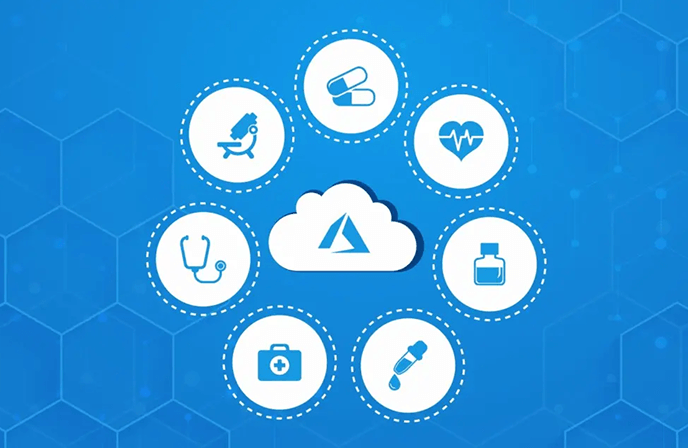
Healthcare CRM integration capabilities


Key benefits of healthcare CRM software

Attracting new patients
Segmented campaigns reach the right audience with the right message, so marketing works from real patient data rather than assumptions.
Enhancing patient loyalty
Communication continues between visits through each patient's preferred channel, supporting longer-term care relationships.
Improving treatment adherence
Alerts prompt patients on the care steps due between appointments, supporting adherence in chronic conditions where missed steps affect clinical results.
Improving billing workflows
Payment history, balances, and claims status are stored with the patient record, so billing questions get resolved on the first call instead of moving between departments.
Optimizing resource distribution
Live visibility into schedules, room availability, and staff capacity reduces idle slots and overbooking, letting resources follow actual demand.
Ensuring security, accuracy and compliance
Role-based access, audit trails, encryption, and consent management are built in, which keeps compliance enforced by the platform.
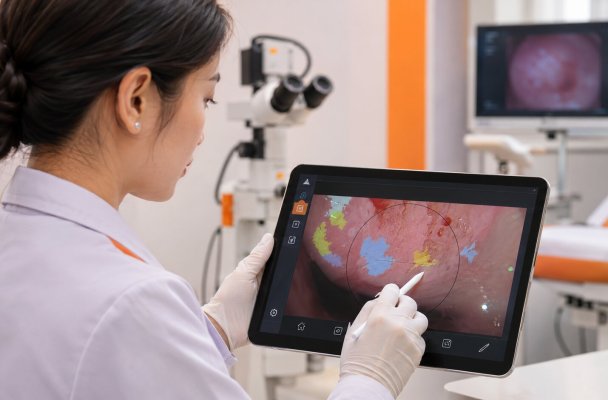

Synchronized tablet imaging and AI heatmaps enhance cervical cancer screening workflows for clinicians
Extended the capture, select, and paint screens of a cervical cancer screening support tool, so clinicians can review images with a heatmap overlay, mark areas of interest, and keep every view aligned from one screen to the next.
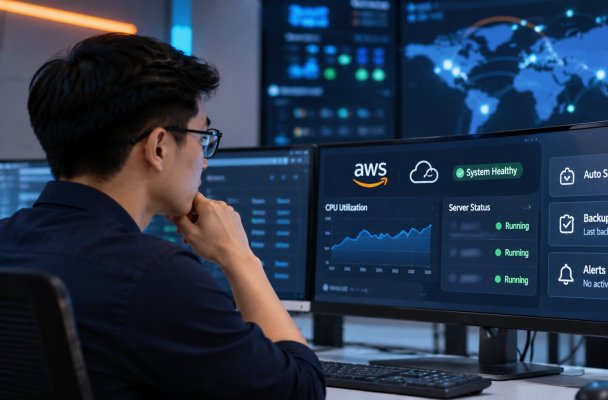
How a seamless Rails modernization enabled automated cloud scheduling and multi account AWS protection
Modernized a mission-critical Ruby on Rails management portal without operational downtime, bringing multi-account AWS oversight, automated server runtimes, AMI backups, and multi-channel incident dispatch into a single control plane.

Multi store luxury watch retailers safeguard repair agreements and customer trust through integrated LINE chat
Replaced fragmented paper slips and spreadsheets with a centralized retail platform that embeds LINE customer messaging into store repair workflows, turning chat agreements and condition photos into verifiable service records.

A multi portal recruitment platform syncs nationwide job postings across nine external boards
Engineered a unified recruitment ecosystem connecting three dedicated web portals with nine external job boards, streamlining station-based search, direct candidate chat, and automated chatbot interview scheduling
-
Synchronized tablet imaging and AI heatmaps enhance cervical cancer screening workflows for clinicians
Extended the capture, select, and paint screens of a cervical cancer screening support tool, so clinicians can review images with a heatmap overlay, mark areas of interest, and keep every view aligned from one screen to the next.
-
How a seamless Rails modernization enabled automated cloud scheduling and multi account AWS protection
Modernized a mission-critical Ruby on Rails management portal without operational downtime, bringing multi-account AWS oversight, automated server runtimes, AMI backups, and multi-channel incident dispatch into a single control plane.
-
Multi store luxury watch retailers safeguard repair agreements and customer trust through integrated LINE chat
Replaced fragmented paper slips and spreadsheets with a centralized retail platform that embeds LINE customer messaging into store repair workflows, turning chat agreements and condition photos into verifiable service records.
-
A multi portal recruitment platform syncs nationwide job postings across nine external boards
Engineered a unified recruitment ecosystem connecting three dedicated web portals with nine external job boards, streamlining station-based search, direct candidate chat, and automated chatbot interview scheduling




Đánh giá từ khách hàng
-

How CAC Croit automated medical document processing with VNEXT's AI development services
VNEXT's expertise in natural language processing helped us automate the time-consuming task of sorting medical literature. Their team understood our background context so well that they consistently turned vague ideas into working tools within just a week. This reliable, Agile approach has made a real difference in our daily operations.
-

In Vietnamese offshore development, technical skill is a given - passion makes the difference
VNEXT was chosen for their team's sincere passion and proactive drive to master challenging, high-value projects. Their flexibility in providing a dedicated, secure office space enabled a remarkably rapid product release in just six months. The project's success relied on top-tier talent using international UML diagrams to ensure seamless communication and high-quality results.
-
Dedicated development team for a Japanese distribution and logistics SIer
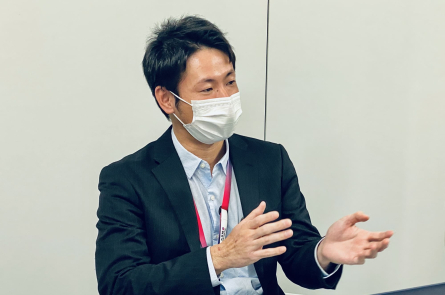
VNEXT brought the Magento expertise our food service project needed, delivering high quality even under tight deadlines through calm, eager-to-learn engineers and proactive communication. By using workshops to bridge cultural gaps around Japanese business customs, their flexible, dedicated approach makes them feel like a true extension of our own team.
Why choose VNEXT as a digital health solutions provider
Am hiểu sâu quy định pháp lý ở nhiều thị trường
Chúng tôi phát triển phần mềm y tế đáp ứng những tiêu chuẩn tuân thủ quan trọng nhất với từng thị trường, bao gồm HIPAA, HITECH, GDPR, Luật Dược phẩm và Thiết bị y tế Nhật Bản (PMD Act), MFDS, FDA, MDR và IMDRF.
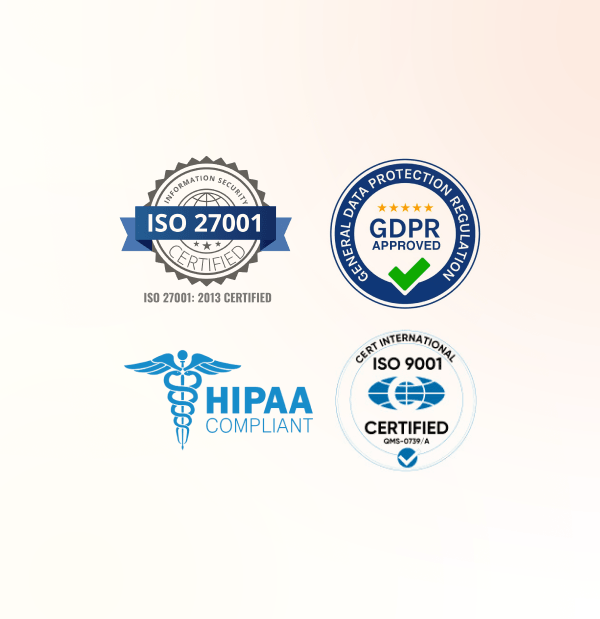
Chứng nhận về quản trị chất lượng và bảo mật
Chứng nhận ISO 27001:2013 thể hiện cam kết của chúng tôi đối với công tác quản trị an toàn thông tin nghiêm ngặt và quy trình phát triển chú trọng chất lượng, áp dụng cho mọi giải pháp phần mềm y tế được bàn giao.
Quan hệ đối tác công nghệ tin cậy
Là đối tác lâu năm của Microsoft, AWS, IBM, UiPath, Salesforce cùng nhiều nền tảng hàng đầu khác, chúng tôi mang đến kinh nghiệm thực chiến trong việc triển khai và tùy chỉnh các giải pháp này theo đúng nhu cầu riêng của từng cơ sở y tế.

Câu hỏi thường gặp
Cost depends mostly on whether you buy off-the-shelf or build custom. Off-the-shelf platforms are cheaper to start but add cost as you scale users and modules. Custom CRMs cost more to build, then have no licensing fees afterward.
Anywhere from a few weeks to several months. The main variables are CRM type, project scope, how many systems you need to connect, and how much preparation the data requires. An off-the-shelf platform with a ready-made EHR integration goes live far faster than a custom system with APIs built from scratch.
Yes. Healthcare CRMs connect to EHR and EMR platforms, billing and revenue cycle systems, patient portals, telehealth software, and marketing platforms. Common systems usually have prebuilt connectors; anything legacy or in-house needs a custom integration, which is part of what we build.