
ERP Customization Services



Our ERP customization services


Workflow and business logic customization
Standard dashboards, approval chains, and routing rules get modified to follow your established business processes.

Integration customization
Our engineers connect your ERP to CRM, HRM, accounting, warehouse, payment, shipping, and analytics platforms through published APIs or custom connectors.

Report and dashboard customization
Our engineers build custom reports, KPI dashboards, and scheduled exports based on the data the system already captures, configured to the metrics each team tracks.

Feature customization
Code-level modification of existing ERP features, extending the platform's standard functions to your specifications.
UX/UI customization
Adjustments to screens, forms, and field visibility by role, improving navigation, visualization, and the overall user experience.
Module development
Pluggable modules built to cover functionality the platform lacks, extending the ERP without altering its source code and keeping future upgrades clean.
AI and automation
We build AI agents and RPA bots into the ERP, taking on repetitive, rules-based tasks such as invoice matching, data entry, and exception routing.
ERP modules we help to customize


Our ERP customization process
Analyze business requirements
We review your workflows, user roles, reporting gaps, integrations, and data issues, along with the manual workarounds your teams have built to compensate for the system. Those workarounds are the useful part, since they show exactly where the standard ERP stops matching how you operate.
Build the customization plan
The plan defines scope, features, workflows, integrations, technical approach, timelines, and testing. It also plans dependencies, risks, training needs, and how each customization affects future ERP upgrades. That last point deserves attention early, since heavy code-level work can make every platform update painful.
Design the solution
Our engineers set the technical approach for each item: what gets built as a pluggable module, what gets modified at code level, and how the pieces fit together without compromising the upgrade path.
Develop
The build runs in defined stages against the approved design, with each customization delivered to specification and progress visible throughout.
Integrate and migrate data
Connectors get built and tested, data mappings validated, and any migration or cleansing handled before the system meets production data.
Platforms we support

SAP customization
Our team extends SAP through custom modules, workflow changes, and integrations, with each build designed to leave the upgrade path clear for future releases.
Odoo customization
Our team customizes Odoo across modules, workflows, reports, and integrations, using the platform's modular structure to add capability without altering the core.

ERP tùy chỉnh
Where no platform fits the operation, our team develops the ERP from the ground up, with each module, workflow, and integration built to the specification you define.
ERP customization vs ERP configuration
- Enabling a module the platform already includes
- Setting approval limits
- Defining user roles and permissions
- Building a report from standard fields
- Adjusting a workflow within its designed options
- New modules the platform does not provide
- Code-level changes to existing features
- Custom API connectors
- Extended data models with fields the schema never had
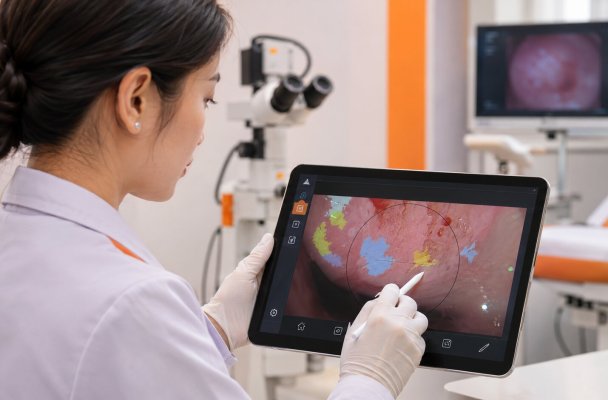

Synchronized tablet imaging and AI heatmaps enhance cervical cancer screening workflows for clinicians
Extended the capture, select, and paint screens of a cervical cancer screening support tool, so clinicians can review images with a heatmap overlay, mark areas of interest, and keep every view aligned from one screen to the next.
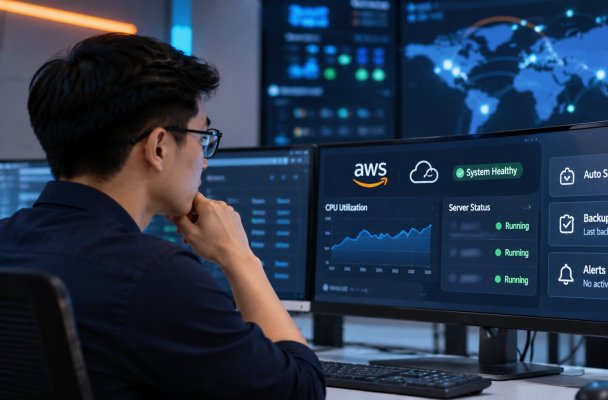
How a seamless Rails modernization enabled automated cloud scheduling and multi account AWS protection
Modernized a mission-critical Ruby on Rails management portal without operational downtime, bringing multi-account AWS oversight, automated server runtimes, AMI backups, and multi-channel incident dispatch into a single control plane.

Multi store luxury watch retailers safeguard repair agreements and customer trust through integrated LINE chat
Replaced fragmented paper slips and spreadsheets with a centralized retail platform that embeds LINE customer messaging into store repair workflows, turning chat agreements and condition photos into verifiable service records.

A multi portal recruitment platform syncs nationwide job postings across nine external boards
Engineered a unified recruitment ecosystem connecting three dedicated web portals with nine external job boards, streamlining station-based search, direct candidate chat, and automated chatbot interview scheduling
-
Synchronized tablet imaging and AI heatmaps enhance cervical cancer screening workflows for clinicians
Extended the capture, select, and paint screens of a cervical cancer screening support tool, so clinicians can review images with a heatmap overlay, mark areas of interest, and keep every view aligned from one screen to the next.
-
How a seamless Rails modernization enabled automated cloud scheduling and multi account AWS protection
Modernized a mission-critical Ruby on Rails management portal without operational downtime, bringing multi-account AWS oversight, automated server runtimes, AMI backups, and multi-channel incident dispatch into a single control plane.
-
Multi store luxury watch retailers safeguard repair agreements and customer trust through integrated LINE chat
Replaced fragmented paper slips and spreadsheets with a centralized retail platform that embeds LINE customer messaging into store repair workflows, turning chat agreements and condition photos into verifiable service records.
-
A multi portal recruitment platform syncs nationwide job postings across nine external boards
Engineered a unified recruitment ecosystem connecting three dedicated web portals with nine external job boards, streamlining station-based search, direct candidate chat, and automated chatbot interview scheduling

Câu hỏi thường gặp

ERP customization means changing or extending an ERP system through development work so it supports your current working flow, covering new modules, code-level changes to existing features, custom reports, workflow extensions, API integrations, and adjustments to how data is captured.

Customization might be your choice when a process is central to how you compete and no configuration option covers it: a manufacturer needing production planning tied to a specific BOM structure, a logistics business needing carrier integrations no platform provides or a regulated operation needing audit records in a format the standard system does not produce. A vendor worth working with will tell you which of your requirements fall into that category, even though the development work would bill more.
The upgrade path carries the most weight, since changes made in the platform's core code can break with each new vendor release and cost you rework every time. Besides, there are three others: over-customization, which leaves the ERP unrecognizable and slower than it was; introduced bugs, where development work creates defects in source code, UI, or logic that nobody thought to test for; and the maintenance load, since every customization is yours to keep running long after the project closes.
Kết nối với chúng tôi
Biến mục tiêu thành kết quả?
Chúng tôi sẵn sàng đồng hành cùng doanh nghiệp.