
How a multi platform IoT architecture delivered real time supervision and ISO task tracking for field robots
Delivered a multi-platform precision agriculture ecosystem bridging Windows, mobile, and web applications, enabling remote telemetry tracking, ISOBUS machine terminal displays, and 2D/3D field task execution for autonomous agricultural robots.
PROJECT OVERVIEW
Field | Content |
Client | A company specializing in IoT applications for agriculture |
Industry | Energy & Environment |
Engagement Model | Design, development, and integration testing engagement |
Scale and Duration | A multi platform build covering Windows, web, and mobile software |
Core Technology Stack | Flutter, NestJS, PostgreSQL with PostGIS, AWS IoT, MQTT |
ABOUT THE CLIENT
This case study is based on a real VNEXT project. The client's identity and certain project details have been anonymized or generalized for confidentiality purposes.
The customer builds IoT applications for agriculture. Its idea is simple to state: a farm covering a wide area, spread over many fields, should be run with the help of connected machines, sensors, and controllers, and the owner should be able to see and direct all of it from a phone or a computer. This sits next to the farm management work described in our agricultural IoT management platform case, but here the focus moves from the field records to the machines themselves.
THE CHALLENGE
A large farm is hard to see. Fields are far apart, machines work out of sight, and the person responsible for the harvest cannot be everywhere. The owner wanted to watch real conditions in the fields remotely and in real time, automate the work of the machines, assign workers and follow their progress, and be warned quickly when something unusual happened.
Agricultural machines also speak a language of their own. ISOBUS, the ISO standard for communication between tractors, implements, and controllers, defines how a machine presents its controls and how it receives its tasks. Software that works with it has to follow the standard closely, since a machine that is almost compatible is not compatible.
The specifications the customer provided were still at a high level and light on detail, which made the early part of the project a matter of understanding the domain as much as writing code. The platform also brought several technologies together, among them cloud authentication, MQTT messaging, and spatial data, and each had to be chosen and combined with care.
PROJECT OBJECTIVE
The customer wanted a set of software modules that show the state of agricultural machines, control the tasks they carry out in the field, and sit within a web and mobile system for planning and supervision, all on a secure cloud foundation and all faithful to the ISO standard.
APPROACH AND METHODOLOGY
Learning the domain together, early
Our team held regular group reviews in which members explained the business to one another and cleared up what was still unclear. Whenever something was not yet clear to us, we logged a question to the customer right away, so doubts were recorded and answered while they were still small.
Looking at how others have solved the same problem
To understand the work better, our team studied tools that other organizations in the field had already built. Seeing how existing products presented machine states and field tasks gave us a shared reference for conversations with the customer.
Giving each core technology an owner
For each of the main technologies, one person took responsibility for understanding it in depth. The team then held short internal sharing sessions where that person presented what they had found, and the group assessed whether the approach was feasible before it entered the project. Decisions about technology were therefore made deliberately, with the whole team in the room.
Treating the standard as the specification
Because the work had to follow the ISO documents closely, the standard itself became a reference alongside the customer's requirements, and the team checked its behavior against both.
TEAM SCALE
Nine people worked on the project, spanning mobile app development, web and backend development, customer communication, and testing.
- Bridge systems engineer: led communication with the customer and carried business questions to and from the team
- Mobile, web, and backend developers: built the modules in Flutter and NestJS across the three platforms
- Manual and automation testers: verified the modules against the standard and the customer's requirements, supported by our software testing practice
THE SOLUTION AND TECHNOLOGY STACK
The software is part of our wider IoT work, which connects machines and sensors to systems people can act on. It has three parts.
Terminal viewer
- Machine status view: lets users monitor and control the operating state of machines and devices that support ISOBUS
Task controller
- Field task monitoring: follows the work being done in the field, including control of spray nozzles for water and pesticides
- Task import and export: brings task data into the system and out of it
- Task execution view: shows a robot carrying out a task in the field in 2D and 3D
- Task setup: lets users choose the device, the task, the section and part of the field, the guidance lines, and the robot's settings
Web remote monitoring and control system
- Work planning: lets users create and edit work plans for machines and robots
- Fleet and people management: manages robots, users, user administrators, and workers
- Four level permissions: separates system administrators, user administrators, users, and workers
- Live supervision: tracks the activity of robots and workers in the field
- Work areas and points of interest: manages the areas where work takes place and marks points of interest within them
Technology Stack
Layer | Technology / Platform Used |
Mobile and Windows | Flutter |
Backend | NestJS |
Database | PostgreSQL with PostGIS for spatial data |
Messaging and IoT | MQTT, AWS IoT |
Cloud and accounts | AWS, Amazon S3, Amazon Cognito |
The cloud foundation is part of our cloud application development work.
THE RESULTS
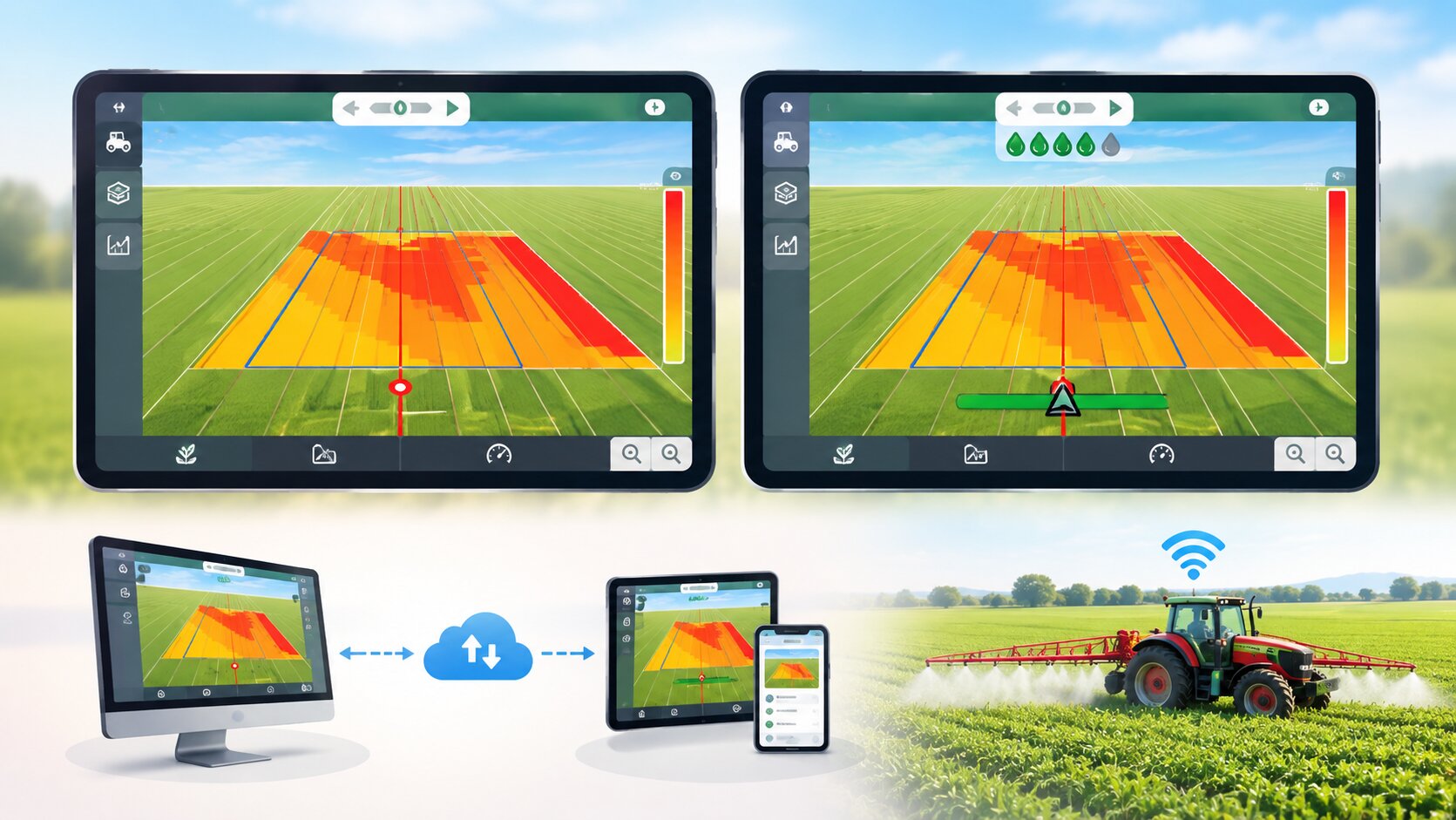
- Machines that can be seen from anywhere: operators watch machine state and task progress remotely, from the web or a phone.
- Tasks that can be set up and followed: field tasks can be imported, configured, and watched as they run, in two and three dimensions.
- Control that matches the people involved: four levels of permission separate administrators, users, and workers.
- A design that follows the standard: the modules were built against the ISO documents, supporting compatibility with machines that use it.
- Technology decisions made with care: each key technology had an owner and a feasibility review before the team adopted it.
A wide farm becomes easier to manage when its machines can be seen and directed from one place, and that is the direction this software points in.
Có thể bạn quan tâm
-
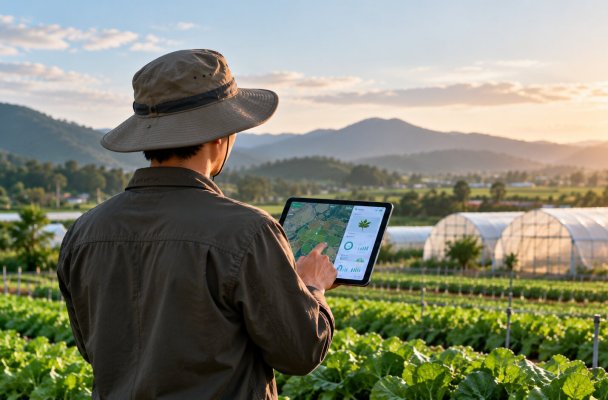
Interactive polygon maps and connected IoT sensors modernize daily operations across regional farms
-
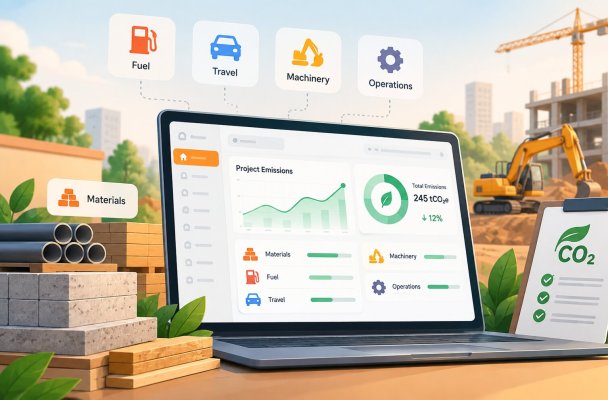
Measuring project carbon emissions across materials transport and on-site machinery on a unified web platform
-
Automating urban safety with IoT road heating systems
-
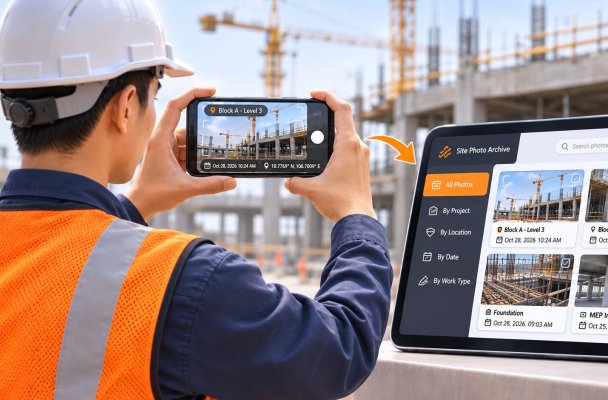
A field camera app and verification album automate tamper proof photo documentation for site inspections
-
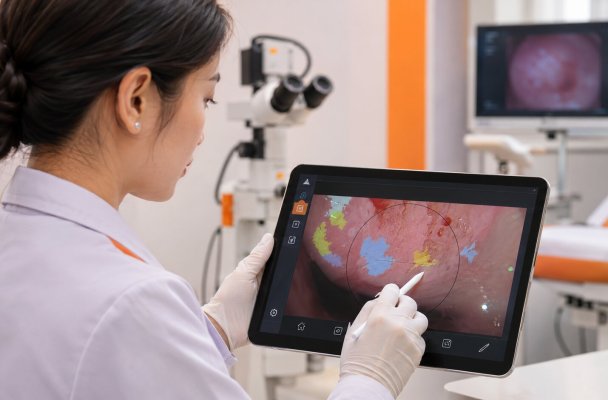
Synchronized tablet imaging and AI heatmaps enhance cervical cancer screening workflows for clinicians
-
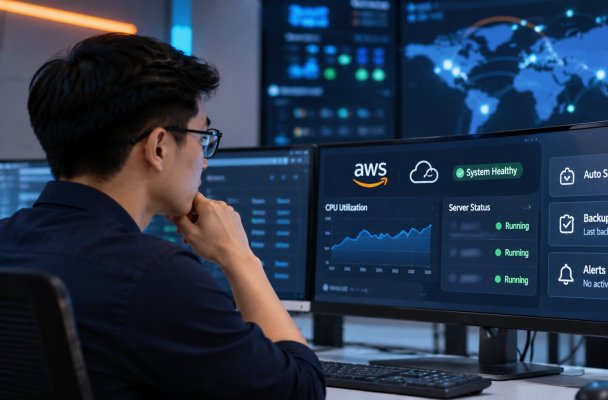
How a seamless Rails modernization enabled automated cloud scheduling and multi account AWS protection
-

Multi store luxury watch retailers safeguard repair agreements and customer trust through integrated LINE chat
-
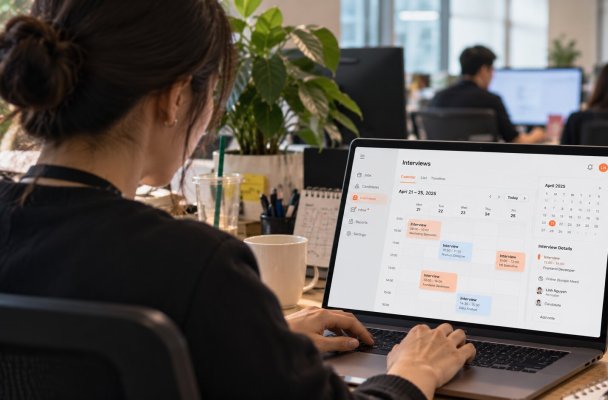
A multi portal recruitment platform syncs nationwide job postings across nine external boards
-

A specialized healthcare recruitment portal puts clinics and candidates in direct conversation

Kết nối với chúng tôi
Biến mục tiêu thành kết quả?
Chúng tôi sẵn sàng đồng hành cùng doanh nghiệp.