
All in one serviced apartment and office portal streamlines multi currency bookings and property accounting at scale
Built a complete digital ecosystem for a serviced apartment and office business in Vietnam, combining a multi-language, multi-currency booking website in ReactJS with a role-based PHP and .NET Core CRM that manages leases, furniture, receivables, and payables in one place.
PROJECT OVERVIEW
Field | Content |
Client | A company building a serviced apartment and serviced office business for Japanese residents and companies abroad |
Market | Vietnam |
Industry | Travel & Hospitality |
Engagement Model | Design, development, and testing engagement |
Scale and Duration | A complete booking website and CRM, from UI, database, and API design through coding and integration testing |
Core Technology Stack | ReactJS, .NET Core, PHP, MySQL, Ubuntu |
ABOUT THE CLIENT
This case study is based on a real VNEXT project. The client's identity and certain project details have been anonymized or generalized for confidentiality purposes.
Moving to a new country is easier when the first home feels familiar. Our customer set out to offer exactly that: serviced apartments and serviced offices in Vietnam, built and run to the standards that Japanese residents and companies expect, with the ambition of looking after as many as a thousand apartments. In travel and hospitality, the guest's experience begins long before arrival, with the website where they search, compare, and book, and it continues behind the scenes in the systems that keep every contract, payment, and room in order. The customer wanted both halves of that experience, and wanted them to work as one.
THE CHALLENGE
A booking site looks simple from the outside: a search box, a list of rooms, a button to reserve. What sits underneath is far more intricate. Guests can look for a long stay or a short one, in an apartment or an office, in different cities, in their own language and currency. Each of those choices touches pricing, availability, contracts, and payments, and the business behind the site needs to see all of it as receivables to collect and payables to settle.
The logic that ties it together was complex, and it had to respect roles. A salesperson, a customer service agent, an accountant, and an apartment owner all need different views of the same information, and none of them should see what belongs to the others.
There was also the matter of timing. The customer was building a business as well as a system, and as the business took shape its requirements kept changing, often after coding had begun. That is a natural thing to happen when a company is learning how its new service should work, and it meant that the way the project was organized would matter as much as the technology it used.
PROJECT OBJECTIVE
The customer wanted a complete platform for running its serviced apartment and office business: a public website where guests could search and book, and a CRM behind it for managing properties, customers, contracts, and the money flowing in and out. Our part covered the design of the interface, the database, and the API, then the coding, unit testing, and integration testing, delivered in a way that could absorb change.
APPROACH AND METHODOLOGY
When requirements are certain to change, the safest plan is one that expects it. Our team organized the project around agile Scrum and divided the work into a series of short sprints, so that the project was never committed to a single, long, fixed path.
That choice changed what a change request meant. In a plan built as one long sequence, a new requirement in the middle can ripple through everything that has been built or scheduled. In a plan built from sprints, the same requirement is weighed against what is already in progress and takes its place in an upcoming sprint, and the work that is under way is left alone. The effect of each change stayed small, and the customer could keep refining the business without feeling that every adjustment put the whole project at risk.
Sprints suited the complexity as well. Booking, payment, contracts, and accounting are big subjects, and breaking them into sprint sized pieces let the team build them up one layer at a time, with the interface, the database, and the API designed carefully before each piece was coded and tested.
Testing followed the same rhythm, with unit tests written alongside the code and integration tests checking that the website, the API, and the CRM worked together, supported by our software testing practice.
TEAM SCALE
Eight people worked on the project. The team covered UI and database design, API development in .NET Core, the React website, the PHP CRM, and testing, and it was small enough that everyone could understand how the website, the API, and the CRM fit together. That shared understanding is what makes it possible to change one part of such a system safely.
THE SOLUTION AND TECHNOLOGY STACK
The result is a web application in two connected parts: a website for guests, and a CRM for the people who run the business.
The guest website
Guests can search by keyword, city, and number of rooms, choosing between long term and short term stays, in their own language and in the currency they prefer, and book directly. The site covers serviced apartments and serviced offices, lists featured projects, and carries the supporting content that helps someone settle in: useful information about living there, current offers, a blog, a page for apartment owners, and an about page. Quick contact options for phone, email, and chat are always within reach, and access to each module depends on the user's role.
The management CRM
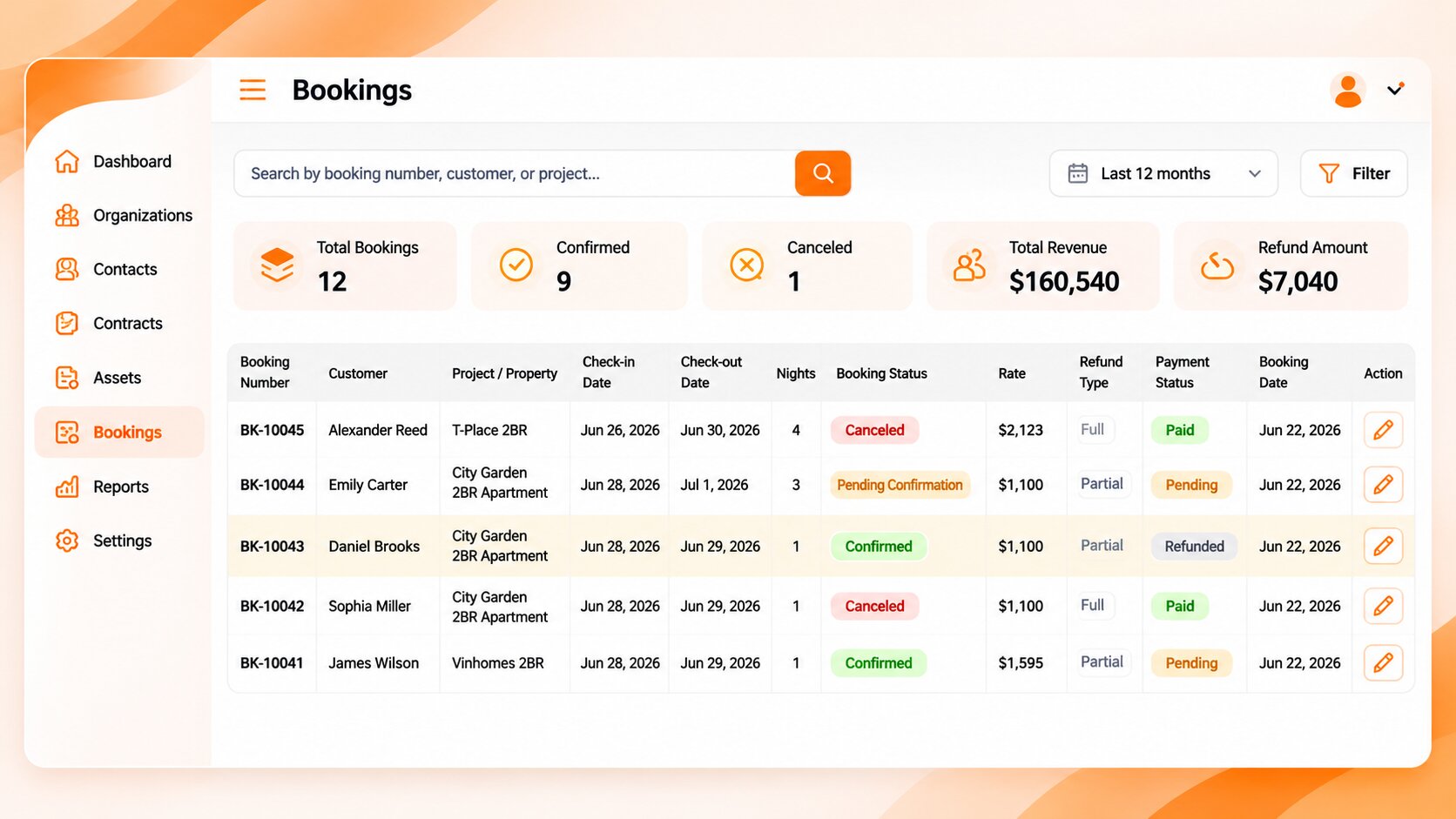
Behind the website, the CRM organizes the business into three areas. The sales and marketing side keeps track of organizations, people, serviced apartments, serviced offices, owners, and projects. The customer service side handles organizations, people, contracts, furniture, and issues. The accounting side manages contracts, receivables, payables, and bookings. Each area is available to the roles that need it.
Layer | Technology / Platform Used |
Website | ReactJS |
API | .NET Core |
CRM | PHP |
Database | MySQL |
Server | Ubuntu |
THE RESULTS
The customer now has the two halves of its business in one platform: a website through which guests can find and book a serviced apartment or office, and a CRM that carries each booking through contracts, receivables, and payables.
Behind it stands a project that handled change well. Because the work was organized in sprints, the customer could keep shaping its new business, adding and adjusting requirements, without throwing delivery off course. It is a good example of a project in which how the work is organized is as valuable as what gets built.
Có thể bạn quan tâm
-

Containerized microservices on AWS Fargate keep high traffic hotel check in and rewards fully reliable
-

Centralized trade compliance and billing system speeds up international shipment settlements for global manufacturers
-
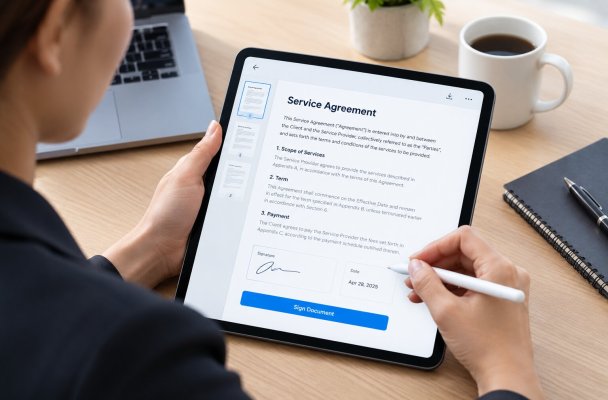
Automated bulk Excel validation and eight step contract workflows streamline service onboarding for retail chains
-

A unified Magento commerce and mobile ordering ecosystem keeps pace with monthly menu and campaign updates
-
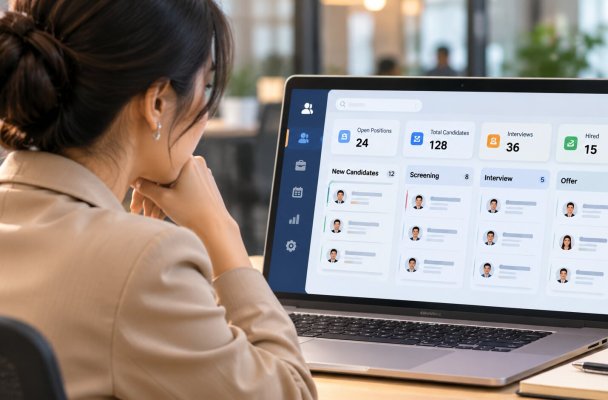
Multi company recruitment CRM delivers stable web and mobile operations across tailored hiring workflows
-

How a multi platform IoT architecture delivered real time supervision and ISO task tracking for field robots
-

A field camera app and verification album automate tamper proof photo documentation for site inspections
-

Synchronized tablet imaging and AI heatmaps enhance cervical cancer screening workflows for clinicians
-

How a seamless Rails modernization enabled automated cloud scheduling and multi account AWS protection

Kết nối với chúng tôi
Biến mục tiêu thành kết quả?
Chúng tôi sẵn sàng đồng hành cùng doanh nghiệp.